




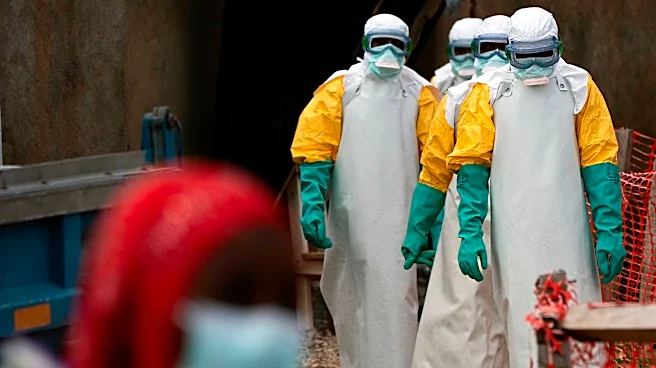
What's Happening?
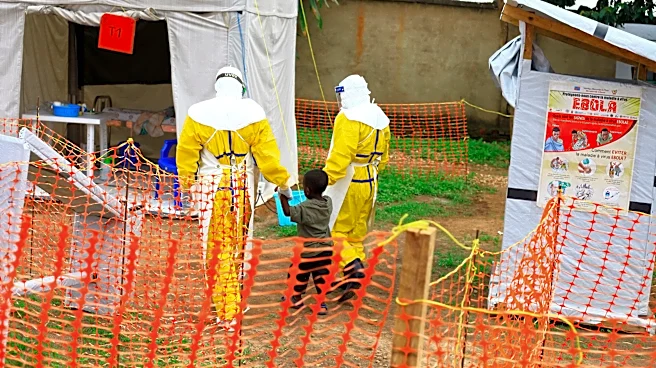
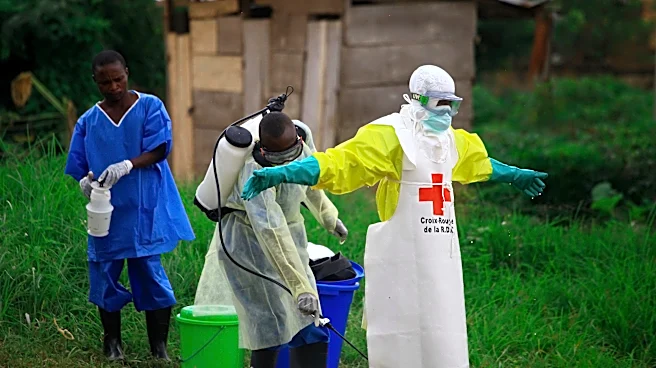
A new Ebola outbreak in Congo's eastern Ituri province has resulted in at least 80 deaths, as reported by local authorities. The outbreak, which was first announced with 65 deaths and 246 suspected cases, has prompted health workers to intensify screening
and contact tracing efforts. The Bundibugyo virus, a variant of Ebola, has been identified as the cause. The outbreak has spread to neighboring Uganda, where a case was confirmed and resulted in a death in Kampala. The Congolese Health Minister, Samuel-Roger Kamba, confirmed eight laboratory-confirmed cases, including four deaths. The suspected index case is a nurse who died in Bunia, the capital of Ituri. The outbreak has been confirmed in three health zones within the province, and efforts are underway to contain the disease.
Why It's Important?
The outbreak poses a significant public health challenge, not only for Congo but also for neighboring countries like Uganda and Kenya, which are on high alert for potential spread. The situation underscores the logistical difficulties faced by Congo in managing such outbreaks, given its vast geography and ongoing conflicts. The spread of Ebola can have severe implications for regional stability and public health, as the disease is highly contagious and often fatal. The outbreak's proximity to international borders raises concerns about cross-border transmission, which could lead to a broader regional health crisis. The response to this outbreak will test the capacity of local and international health organizations to manage and contain the disease effectively.
What's Next?
Health authorities in Congo and neighboring countries are likely to continue and possibly intensify their efforts to screen and trace contacts of infected individuals. International health organizations may increase their support to ensure adequate resources and expertise are available to manage the outbreak. The situation will require ongoing monitoring to prevent further spread, and there may be calls for increased international assistance to bolster local health systems. The response will also involve public health education to inform communities about preventive measures and symptoms of Ebola.