





What's Happening?
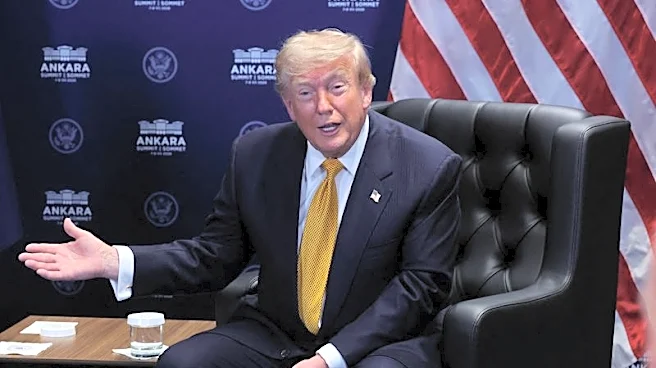
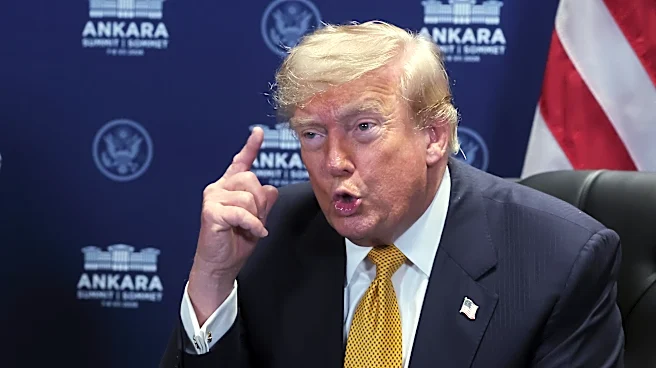
President Trump announced that the memorandum of understanding with Iran is effectively dead after ordering airstrikes on 80 targets in response to Iranian attacks on commercial ships in the Strait of Hormuz. In his remarks, Trump expressed frustration
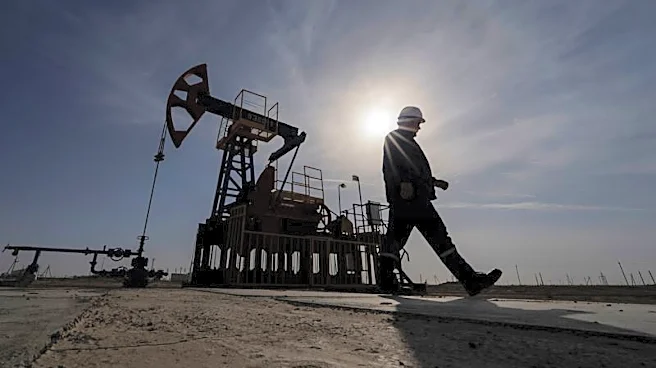
with Iran, labeling them as 'scum' and 'sick people,' and indicated a reluctance to continue negotiations. The airstrikes were a response to Iran's insistence on controlling shipping routes in the strait, a critical passage for global oil exports. Trump's comments led to a spike in oil prices and a drop in stock futures, reflecting market concerns over escalating tensions.
Why It's Important?
The breakdown of the peace deal with Iran marks a significant shift in U.S. foreign policy, potentially escalating military and economic tensions in the region. The Strait of Hormuz is a vital artery for global oil supply, and disruptions could have widespread economic implications. Trump's decision to abandon negotiations could lead to increased instability in the Middle East, affecting international relations and global markets. The situation underscores the challenges of diplomatic engagement with Iran and the potential for military conflict to impact global economic stability.
What's Next?
The U.S. and Iran are likely to face heightened tensions, with potential for further military confrontations. The international community may seek to mediate or respond to prevent further escalation. Economic stakeholders will closely monitor oil prices and market reactions, while political leaders may reassess strategies for engaging with Iran. The situation could influence U.S. domestic politics, particularly in the context of upcoming elections, as foreign policy becomes a focal point of debate.