







What's Happening?
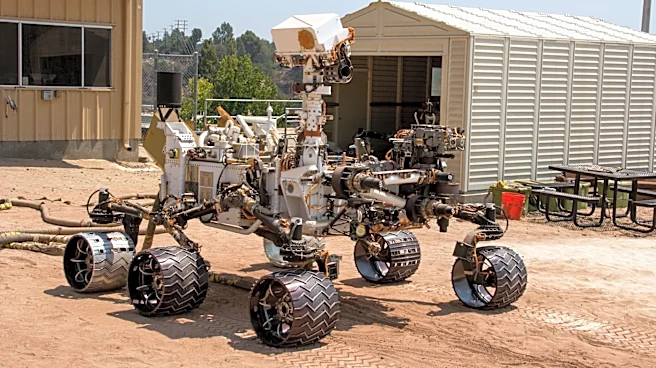
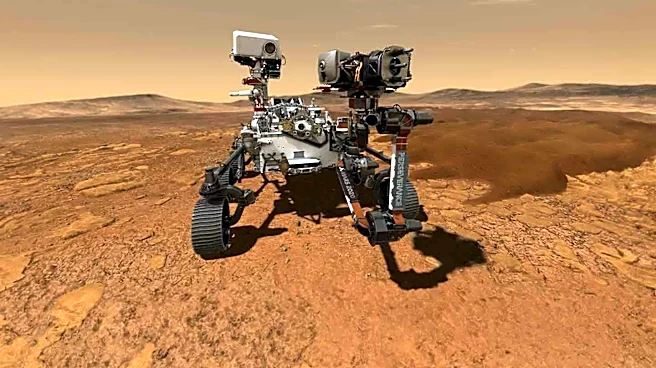
NASA's Perseverance rover has discovered complex organic matter in rocks within the Jezero crater on Mars, potentially indicating ancient microbial life. The rocks contain macromolecular carbon, a type of organic matter found in Earth rocks with fossilized
biological carbon. This discovery, detailed in a new paper, highlights the presence of potential biosignatures, although the formation mechanism of the carbon remains unknown. The findings suggest that the organic matter could have formed through biotic or abiotic processes, and further analysis is needed to determine its origin.
Why It's Important?
The discovery of complex organic matter on Mars is a significant step in the search for past life on the planet. It provides evidence that Mars may have once harbored conditions suitable for life, contributing to our understanding of the planet's history and evolution. The presence of macromolecular carbon raises questions about the potential for life beyond Earth, influencing future missions and research priorities. This finding could also impact the planning of sample return missions, as scientists seek to analyze Martian materials in more detail on Earth.
What's Next?
Further analysis of the organic matter is required to determine its origin, whether biotic or abiotic. NASA's Perseverance rover will continue to explore the Jezero crater, collecting samples that may be returned to Earth for more detailed study. The discovery may prompt discussions about future missions to Mars, including the potential for human exploration. As scientists continue to analyze the data, the findings could influence our understanding of life's potential in the universe and guide the search for extraterrestrial life.