


What's Happening?
The National Irrigation Administration (NIA) is intensifying its efforts to bolster food security by focusing on modern irrigation systems and climate-resilient infrastructure. This initiative involves a shift from traditional project delivery to a more
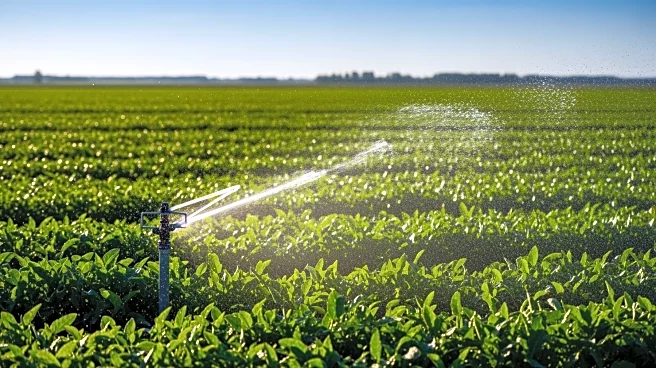
proactive, systems-based approach. The NIA is standardizing operations, improving oversight, and adopting data-driven planning to ensure reliable irrigation services amid variable weather conditions. Key projects like the Union Water Impounding Dam in Cagayan and the Calunasan Small Reservoir Irrigation Project in Bohol are designed to provide year-round irrigation and serve as flood-control structures. Central to this strategy is the collaboration with irrigators’ associations, which are organized groups of farmers managing communal irrigation systems. These associations help coordinate water distribution, monitor system conditions, and facilitate communication between local communities and the NIA.
Why It's Important?
This initiative is crucial for enhancing agricultural resilience and ensuring long-term food security in the Philippines. By stabilizing water supply across seasons, the NIA enables farmers to plan and harvest with greater certainty, reducing the risks associated with flooding and drought. The collaboration with irrigators’ associations ensures that irrigation infrastructure is managed effectively by those who depend on it, leading to more responsive and accessible government support. This approach not only improves agricultural productivity but also strengthens community resilience against climate change impacts. The NIA's efforts contribute to a more stable agricultural output, which is vital for maintaining a steady food supply for markets and households.
What's Next?
The NIA plans to continue investing in climate-resilient infrastructure and strengthening institutional systems to support agricultural development. By maintaining partnerships with irrigators’ associations, the agency aims to enhance the reliability of irrigation systems and ensure that projects deliver long-term benefits. The focus will remain on practical coordination and reliability, with an emphasis on understanding local conditions and supporting farmers' livelihoods. As the Philippines prioritizes food security and climate adaptation, the NIA's role as a key partner in agricultural development is expected to grow, with visible impacts in organized farmer groups managing essential water resources.