
What's Happening?
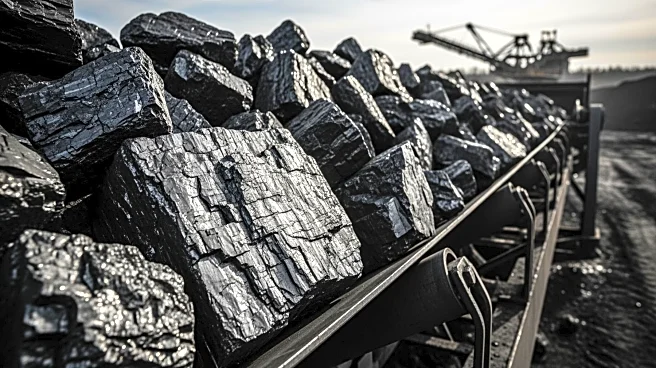
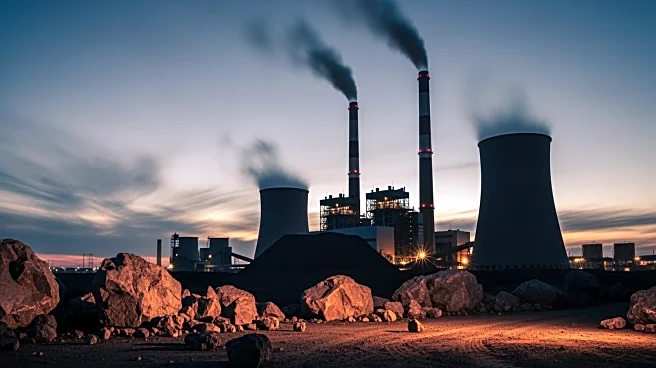
The Trump administration has mandated that the aging Unit 1 of Craig Station, a coal plant in Moffat County, Colorado, remain operational until March 30, 2026. This decision, made under Section 202(c)
of the Federal Power Act, aims to prevent potential electricity shortages. The order has sparked significant backlash from Colorado's governor and environmental groups, who argue that no emergency justifies the plant's continued operation. The plant, which recently broke down, requires costly repairs, potentially burdening Tri-State Generation and Transmission Association's customers with increased costs. Tri-State, the plant's operator, is exploring cost-sharing options to mitigate financial impacts.
Why It's Important?
This decision highlights the ongoing tension between federal energy policies and state-level environmental goals. By keeping the coal plant open, the Trump administration prioritizes immediate energy security over long-term environmental strategies aimed at reducing coal dependency. This move could lead to increased electricity costs for rural communities served by Tri-State, affecting local economies. Additionally, it underscores the administration's broader strategy of using emergency powers to support coal plants, which may have implications for national energy policy and environmental regulations.
What's Next?
The order's extension beyond March 2026 remains a possibility, depending on the perceived energy needs. Tri-State is currently assessing compliance strategies while seeking ways to distribute costs more equitably. Legal challenges from environmental groups, such as Earthjustice, are likely, as they contest the legality of the order. The situation may prompt further debate on the balance between energy security and environmental sustainability, influencing future policy decisions at both state and federal levels.