





What's Happening?
The U.S. Department of Energy (DOE) offers comprehensive guidance on microgrid technologies and their applications, including technical requirements and policy considerations. Microgrids are defined by the DOE as interconnected loads and distributed energy
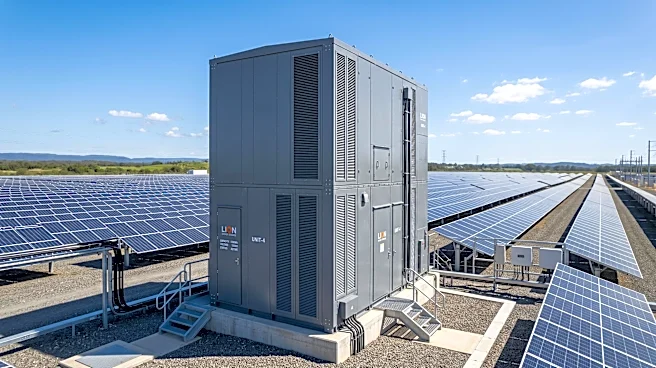
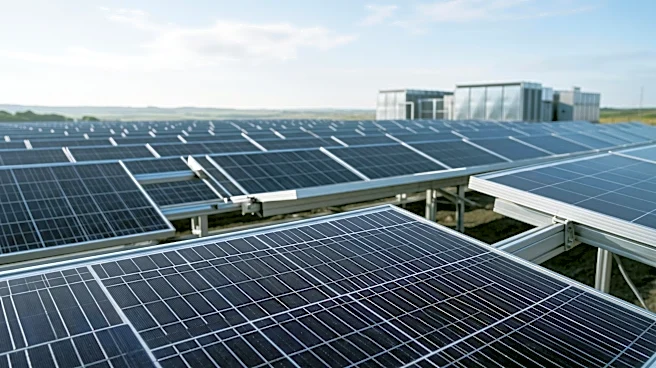
resources that operate as a single controllable unit, capable of functioning both connected to the main grid and independently during outages. These systems integrate local electricity generation, battery storage, and control systems to provide energy resilience, particularly for critical operations such as hospitals, data centers, and manufacturing facilities. The DOE envisions microgrids evolving into interconnected energy networks that can strengthen the wider electricity system, managing local resources during routine conditions and major disruptions.
Why It's Important?
The DOE's emphasis on microgrids highlights a critical shift towards decentralized and resilient energy systems in the U.S. As traditional electricity grids face increasing challenges from aging infrastructure, extreme weather events, and growing demand, microgrids offer a solution to maintain power continuity for essential services. This is vital for national security, public health, and economic stability. By promoting microgrid adoption, the DOE is supporting the development of more robust energy infrastructure that can withstand disruptions, reduce reliance on long-distance transmission, and integrate diverse local energy resources. This approach empowers communities and businesses to take greater control over their energy supply, enhancing operational reliability and potentially reducing carbon emissions depending on the chosen energy sources.
What's Next?
Organizations considering microgrids can utilize the detailed information provided by the U.S. Department of Energy to understand technical requirements and policy considerations. The DOE's vision suggests a future where multiple microgrids coordinate with utilities and each other, forming a more resilient and flexible national energy network. This will likely involve continued research and development in control technologies, energy storage solutions, and the integration of various renewable energy sources. As electricity demand continues to grow, the role of microgrids in managing local demand and supporting the broader grid is expected to expand, necessitating ongoing collaboration between government, industry, and local communities.
Beyond the Headlines
The promotion of microgrids by the DOE signifies a deeper strategic move towards a more distributed and intelligent energy infrastructure. This goes beyond simply providing backup power; it represents a fundamental change in how electricity is generated, distributed, and consumed. The flexibility of microgrids to integrate various energy resources, from solar to traditional generators, allows for tailored solutions that can adapt to local needs and environmental goals. This could lead to increased energy independence for communities and critical facilities, reducing their vulnerability to large-scale grid failures. Furthermore, the evolution of microgrids into interconnected networks could foster new models of energy management and trading, potentially transforming the energy market landscape and promoting greater energy democracy.