








What's Happening?
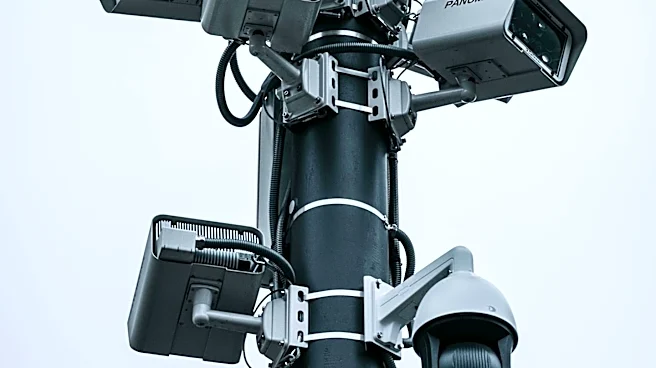
Benn Jordan, a musician, YouTuber, researcher, and investigative journalist, recently testified before the Senate Judiciary Committee’s Subcommittee on Crime and Counterterrorism regarding automatic license plate readers (ALPRs) and the surveillance they
enable. Jordan has been a prominent critic of Flock Safety, a leading ALPR manufacturer, and its practices. His work has contributed to growing bipartisan backlash against Flock, leading to contract cancellations in numerous cities and counties, and an investigation by Republican Senator Josh Hawley. Flock Safety has also announced plans to reduce its workforce by approximately 18 percent. Jordan's testimony highlighted concerns about the lack of transparency from government entities in deploying such surveillance systems and the security vulnerabilities inherent in these technologies. He emphasizes that the issue extends beyond Flock to other companies like Axon and Motorola, which are building similar surveillance networks.
Why It's Important?
The increased scrutiny on ALPR systems and broader surveillance technologies has significant implications for privacy and civil liberties in the United States. Jordan's efforts have brought to light how private companies, in conjunction with government and law enforcement, are creating extensive surveillance networks without adequate public oversight or security protocols. The bipartisan nature of the pushback suggests a growing public and political concern across the ideological spectrum regarding the extent of government and corporate surveillance. This development could lead to new legislative efforts to regulate surveillance technology, mandate greater transparency, and establish stricter security standards. The debate also touches upon the effectiveness of these systems in reducing crime versus their potential for abuse and the erosion of individual freedoms, prompting a reevaluation of how technology is deployed in public safety.
What's Next?
The ongoing Senate investigation into Flock Safety and other ALPR systems could result in new federal regulations or guidelines for the deployment and use of surveillance technology. Local governments are likely to continue reevaluating their contracts with surveillance providers, potentially leading to more cancellations or demands for increased accountability and transparency. Jordan advocates for tangible solutions, including open audit logs using immutable data storage, and the ability for citizens to opt out of tracking unless involved in serious crimes. The public discourse is expected to continue focusing on the balance between security and privacy, potentially influencing future elections at local and national levels as citizens become more engaged in local politics concerning surveillance policies. Companies in the surveillance industry may face increased pressure to improve security measures and engage more constructively with critics and policymakers.
Beyond the Headlines
The controversy surrounding ALPRs and surveillance technology reveals deeper societal questions about the nature of privacy in the digital age and the role of technology in governance. The argument that 'you don't have privacy in public' is being challenged as ubiquitous cameras and data aggregation create comprehensive digital footprints of individuals' movements. This shift necessitates a re-evaluation of legal and ethical frameworks surrounding public surveillance. The security vulnerabilities exposed by Jordan highlight a critical failure in government oversight, where advanced technologies are adopted without rigorous security assessments. This raises concerns about potential misuse by malicious actors, both domestic and foreign, who could exploit insecure systems. The public's growing distrust in both private companies and government entities regarding data privacy could lead to broader movements advocating for digital rights and more robust protections against pervasive surveillance, potentially reshaping the relationship between citizens and the state.