

What's Happening?
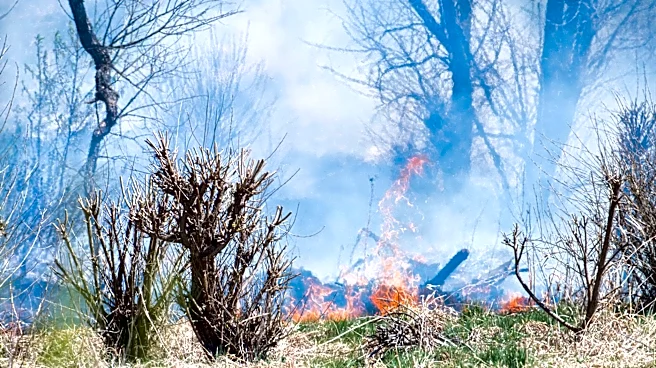
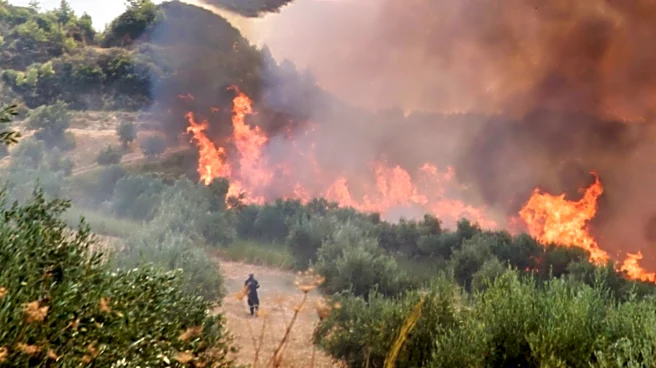
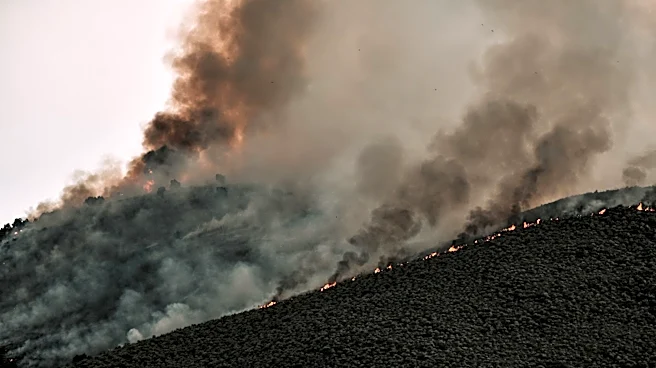
Oregon is experiencing its worst wildfire season on record, with over 2.3 million acres burned so far in 2026. The largest fire, the Big Grass Fire, has burned more than half a million acres and is only 41% contained. Other significant fires include the Rowe
Creek Complex and the Grasshopper Fire, which have prompted evacuation orders and road closures. Firefighting efforts are ongoing, but challenging weather conditions are expected to complicate containment.
Why It's Important?
The scale of the wildfires in Oregon underscores the increasing severity of fire seasons, likely exacerbated by climate change. The destruction impacts local communities, wildlife, and the environment, and poses significant challenges for emergency services. The economic cost of these fires is substantial, affecting industries such as agriculture and tourism, and highlighting the need for improved fire management and climate adaptation strategies.
What's Next?
Firefighting efforts will continue as crews work to contain the fires and protect structures. The state may need to reassess its fire management strategies and consider long-term solutions to mitigate the impact of future wildfires. This situation could prompt policy discussions on climate change and resource allocation for emergency services.