


What's Happening?
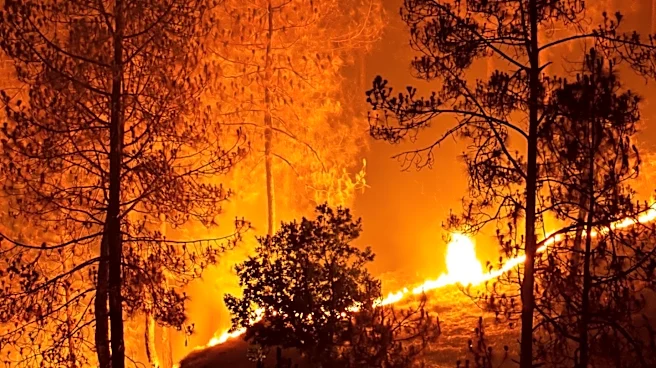
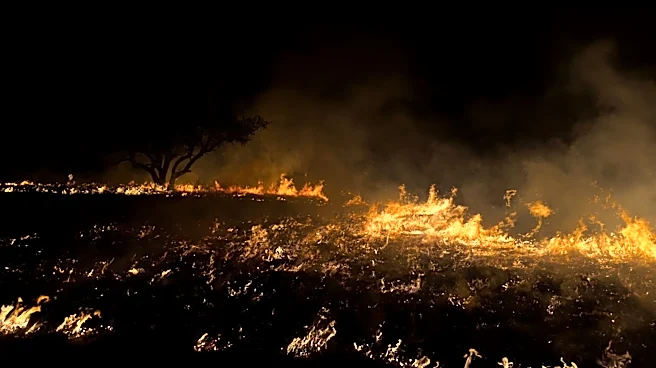
The Deep Creek Fire, located approximately 25 miles northeast of Lowell in the Fall Creek area of the Willamette National Forest, has grown to an estimated 60 acres. Firefighters are engaged in full suppression efforts, according to the U.S. Forest Service.
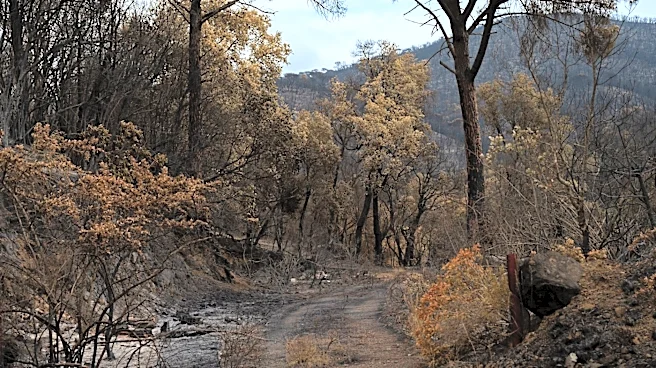
The fire is burning in challenging terrain, characterized by standing and downed snags on steep slopes, which is contributing to active fire behavior. Air attack and helicopters are expected to assist ground crews by cooling the advancing fire front once cloud cover lifts. Unstable and windy conditions are anticipated ahead of a cold front, which is forecast to bring widespread precipitation on Wednesday. Ground crews are employing direct suppression tactics where feasible and are also establishing indirect control lines.
Why It's Important?
The expansion of the Deep Creek Fire to 60 acres poses a significant threat to forest ecosystems and potentially to nearby communities. Wildfires in steep, snag-filled terrain are particularly difficult to control, increasing the risk to firefighting personnel. The expected windy conditions could exacerbate fire spread, making containment more challenging before the arrival of forecast precipitation. This incident highlights the ongoing risk of wildfires in forested regions, especially during periods of dry and windy weather. The fire's growth necessitates extensive resource allocation, including air support and ground crews, which can strain firefighting capabilities if multiple incidents occur simultaneously. Public safety is also a concern, with officials urging people to avoid the area to ensure the safety of both firefighters and the public.
What's Next?
Firefighters will continue their full suppression efforts on the Deep Creek Fire, utilizing both ground and air resources as weather conditions permit. The arrival of a cold front and widespread precipitation on Wednesday is expected to aid in cooling the fire and potentially slowing its spread. However, until then, active fire behavior is anticipated due to the terrain and weather conditions. A road closure is being implemented for Forest Service Road 18 from Road 1834 to Road 1844, including the entire Road 1839 system, to ensure public and firefighter safety. Residents in surrounding communities should remain aware of visible smoke and can monitor air quality information via AirNow.gov. The U.S. Forest Service will provide updates on containment progress and any changes in fire behavior.
Beyond the Headlines
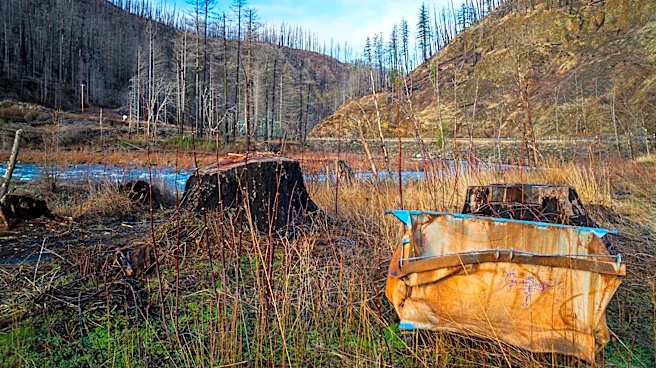
The Deep Creek Fire underscores the persistent challenge of wildfire management in the Western United States, a challenge often exacerbated by climate change, which contributes to hotter, drier conditions and longer fire seasons. The fire's location within the footprint of the previous Gales Fire suggests a landscape already impacted by past blazes, potentially leading to more volatile fuel loads. The use of both direct and indirect suppression tactics reflects the complex strategies required to combat fires in difficult terrain, balancing aggressive containment with firefighter safety. Such incidents also bring to light the broader ecological impacts of wildfires, including habitat destruction, soil erosion, and long-term changes to forest composition, which can have lasting effects on biodiversity and ecosystem services.