








What's Happening?
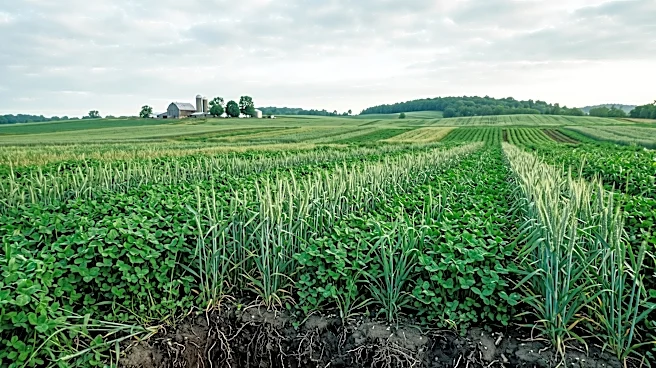
Regenerative organic farming is gaining recognition as a powerful tool in the fight against climate change, offering a way for farmers to protect the environment while producing sustainable food. This approach focuses on minimizing soil disturbance, reducing
tillage, and implementing practices that keep carbon locked in the ground rather than releasing it into the atmosphere. Healthy soil acts as a carbon sink, absorbing and storing carbon, which is crucial for slowing climate change by removing greenhouse gases like CO2 from the atmosphere. Companies like Lundberg Family Farms have transitioned from certified organic to certified regenerative organic production, expanding their offerings and demonstrating the commercial viability of these practices. The Regenerative Organic Certified (ROC) seal helps consumers identify products made using these methods.
Why It's Important?
The adoption of regenerative organic farming practices is critical for the U.S. agricultural sector and its contribution to national climate goals. Conventional farming methods, particularly tilling, release significant amounts of stored carbon into the atmosphere, contributing to greenhouse gas emissions. Regenerative practices, by contrast, enhance soil health, increase biodiversity, and improve the soil's ability to retain water, making farms more resilient to climate change impacts like drought. This shift offers a dual benefit: environmental protection through carbon sequestration and sustainable food production. The success of companies like Lundberg Family Farms in expanding regenerative organic products without increasing prices demonstrates a viable path for broader industry adoption, potentially transforming the agricultural landscape and offering consumers more climate-friendly food choices.
What's Next?
The transition to regenerative organic certification typically takes about three years, requiring farmers to adjust practices and manage potential financial and production challenges. Long-term support from companies and consumers is essential to encourage more farmers to make this investment. Continued consumer demand for ROC-certified products will be crucial in driving market expansion and providing incentives for farmers. Additionally, research and extension services will likely focus on supporting farmers through this transition, addressing challenges such as initial yield rate adjustments and the cost of new practices. Policy initiatives may also emerge to incentivize regenerative organic farming, recognizing its environmental benefits and its role in a resilient food system.
Beyond the Headlines
The rise of regenerative organic farming signifies a deeper paradigm shift in agriculture, moving away from industrial models that deplete natural resources towards systems that work in harmony with ecological processes. This approach not only addresses climate change but also tackles issues of soil degradation, water quality, and biodiversity loss. It challenges the notion that increased productivity must come at the expense of environmental health. The emphasis on soil health as a foundational element for both food production and climate mitigation highlights an interconnectedness that has often been overlooked. This movement could lead to a re-evaluation of agricultural subsidies, research priorities, and consumer education, fostering a more holistic understanding of food systems and their impact on the planet.