



What's Happening?
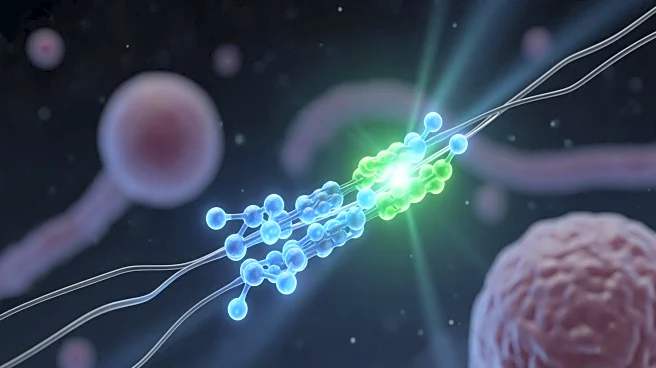
Researchers at Stanford University have developed a novel approach to enhance immunotherapy for solid tumors by equipping immune cells with metabolite-sensing receptors. These receptors recognize byproducts of cancer cells, triggering immune cells to migrate
toward and infiltrate tumors. This method differs from traditional CAR T-cell therapy, which targets proteins on cancer cell surfaces. The study, published in Nature Immunology, demonstrated that engineered immune cells could effectively control tumor growth in mice with human breast and ovarian cancers, significantly improving survival rates.
Why It's Important?
This innovative approach addresses a major challenge in cancer treatment: the difficulty of targeting solid tumors. By leveraging cancer cell metabolites as navigation cues, the new method enhances the ability of immune cells to locate and attack tumors. This could lead to more effective treatments for solid tumors, which are often resistant to existing therapies. The research highlights the potential for metabolite-sensing receptors to improve the precision and efficacy of cancer immunotherapy, offering hope for patients with hard-to-treat cancers.
What's Next?
The research team plans to test the engineered cells in clinical trials and explore the potential of other metabolite-sensing receptors. If successful, this approach could be expanded to target a wider range of tumor types. The findings may also inspire further research into the role of cancer metabolism in immunotherapy, potentially leading to new diagnostic and therapeutic strategies. As the field of cancer treatment continues to evolve, stakeholders will be watching closely to see how these developments impact patient care and treatment outcomes.