





What's Happening?
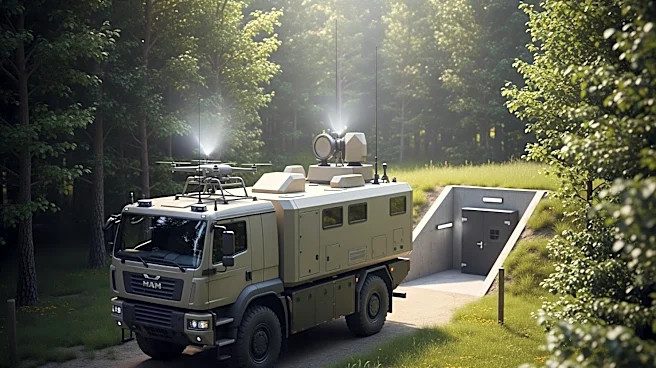
The Israeli Defense Ministry has reported significant progress in countering Hezbollah's fiber-optic drones, which have posed a threat to IDF troops on the northern front. The ministry has been testing and deploying various systems, including tactical
radar and acoustic detection systems, to enhance drone detection capabilities. These efforts are part of a broader strategy to address drone threats through detection, warning, passive defense, missile defense, and drone interceptors. The ministry is also exploring future energy-based weapons to disrupt drone electrical circuits. Despite challenges in achieving high interception success rates, the ministry continues to refine its systems and learn from operational incidents and footage from the Russia-Ukraine war.
Why It's Important?
The advancements in anti-drone technology are crucial for Israel's national security, particularly in mitigating threats from Hezbollah. The deployment of these systems not only protects military personnel but also strengthens Israel's defense capabilities against evolving drone technologies. The focus on energy-based weapons and improved detection systems highlights the ongoing technological race to counter drone threats. This development is significant for the defense industry, as it underscores the need for continuous innovation in military technology to address emerging threats. The lessons learned from the Russia-Ukraine conflict further emphasize the importance of adapting to new warfare tactics.
What's Next?
The Israeli Defense Ministry plans to continue testing and deploying new systems across various locations to enhance its anti-drone capabilities. The integration of portable laser systems and the development of energy-based weapons are expected to provide long-term solutions to drone threats. The ministry will also focus on reducing false alarms and improving the reliability of detection systems. As these technologies evolve, Israel may collaborate with international partners to share insights and further develop its defense strategies. The ongoing efforts to counter drone threats will likely influence future military policies and procurement decisions.