



What's Happening?
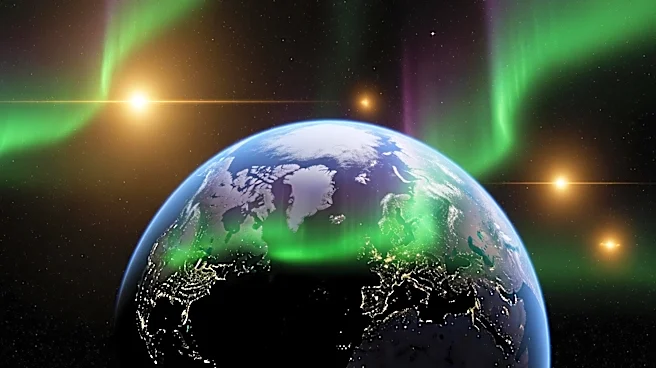
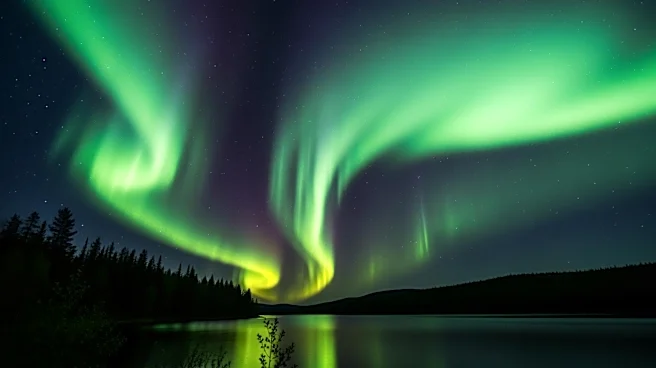
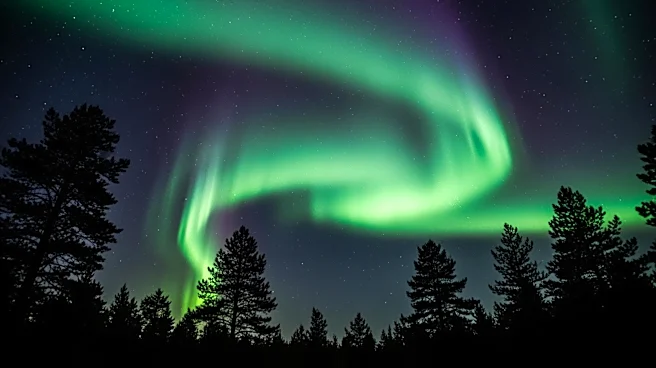
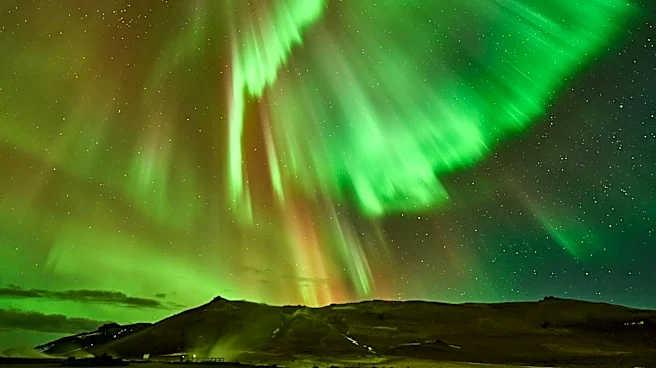
The National Oceanic and Atmospheric Administration (NOAA) forecasters have indicated a potential display of the northern lights over New England due to a series of coronal mass ejections (CMEs) from the sun. These CMEs, which are large clouds of charged
particles and magnetic energy, can trigger geomagnetic storms when they interact with Earth's magnetic field. The forecast suggests that the northern lights could be visible across New England, depending on the orientation and strength of the CMEs as they reach Earth. The geomagnetic storms are rated on a scale from G1 (minor) to G5 (extreme), with current predictions suggesting a G2-level storm. The visibility of the aurora borealis is contingent on the CMEs' arrival and orientation, which remains uncertain until they are detected by satellites approximately one million miles from Earth.
Why It's Important?
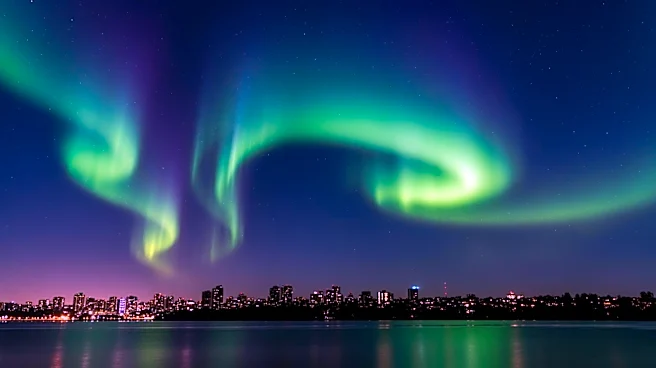
The potential visibility of the northern lights in New England is significant as it offers a rare opportunity for residents to witness this natural phenomenon. Geomagnetic storms, while visually stunning, can also have broader implications, such as affecting satellite operations and power grids. The ability to predict and monitor these events is crucial for mitigating potential disruptions. Additionally, the increased solar activity is part of Solar Cycle 25, which is expected to continue, providing more opportunities for aurora displays. This event highlights the importance of space weather forecasting and its impact on both scientific research and public interest.
What's Next?
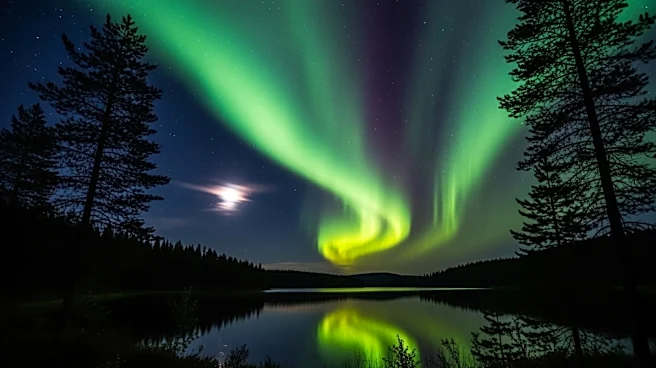
Forecasters will continue to monitor the progression of the CMEs and provide updates on the likelihood of the northern lights being visible. Residents in New England are advised to check the Space Weather Prediction Center's website for real-time updates. The best chance to view the aurora is between 10 p.m. and 2 a.m., away from city lights. As Solar Cycle 25 progresses, further solar activity and potential aurora displays are anticipated, necessitating ongoing observation and forecasting efforts.