

What's Happening?
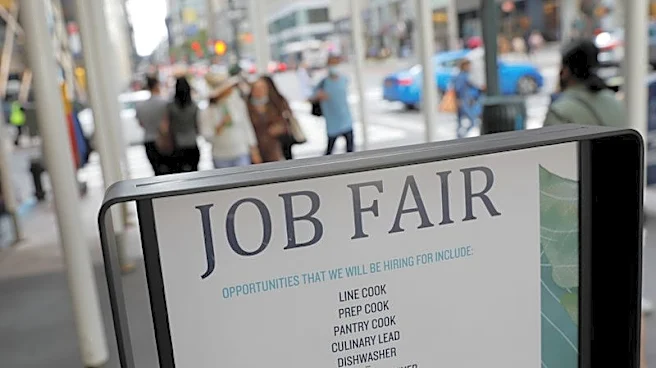
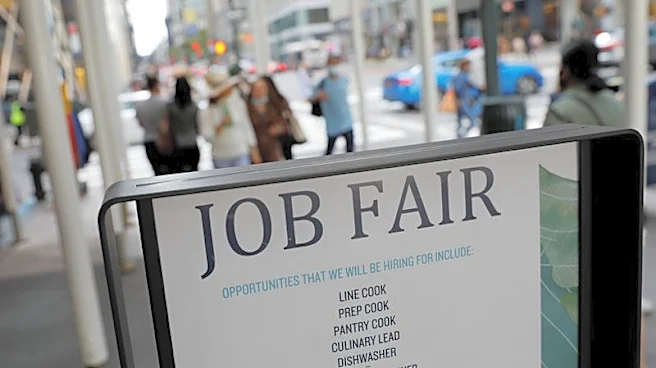
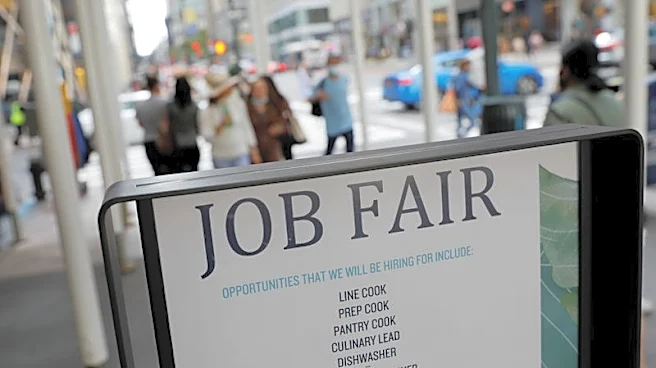
The Bureau of Labor Statistics reported a decline in long-term unemployment in July, with the number of people unemployed for 27 weeks or more decreasing by 64,000 to approximately 1.8 million. However, economists caution that this decline is not necessarily
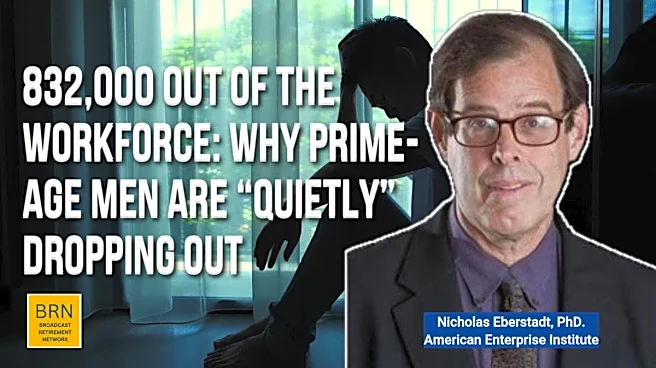
positive, as it appears to be driven by discouraged workers exiting the labor force rather than finding employment. The national unemployment rate also fell to 4.1%, but labor force participation is at its lowest since February 2021. This trend suggests that many job seekers are giving up on finding work due to a challenging job market characterized by low hiring rates.
Why It's Important?
The reduction in long-term unemployment, driven by workers leaving the labor force, poses significant economic and social challenges. Individuals who stop looking for work are not counted in unemployment statistics, potentially masking the true state of the job market. This can lead to a misleadingly low unemployment rate, which does not reflect the difficulties faced by job seekers. The long-term unemployed often face financial hardships, as they may lose eligibility for unemployment benefits and struggle to find new employment. This situation can exacerbate economic inequality and hinder economic growth, as a shrinking labor force limits the economy's capacity to expand.
What's Next?
Addressing the underlying issues in the labor market will require targeted policy interventions to encourage workforce participation and support job seekers. This may involve enhancing job training programs, improving access to employment opportunities, and providing financial assistance to those affected by long-term unemployment. Policymakers and economists will need to closely monitor labor market trends to ensure that efforts to reduce unemployment are effective and sustainable. The focus will be on creating a more inclusive job market that supports both economic growth and social equity.