







What's Happening?
The Brooklyn Public Library's Pacific Library, a 120-year-old Carnegie branch located at 25 4th Avenue and Pacific Street in Downtown Brooklyn, is undergoing a significant renovation. Safdie Architects, in collaboration with New York-based AYON Studio,
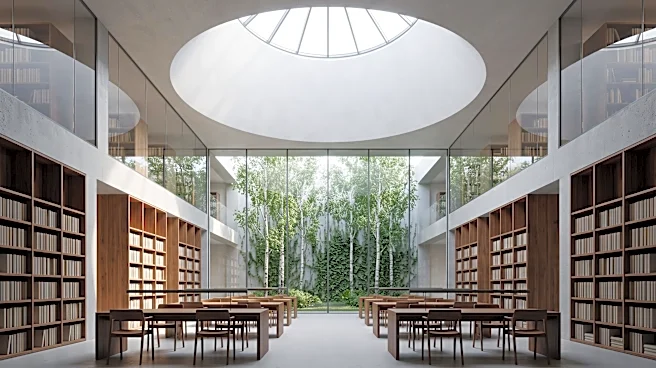
released renderings of the project. The redesign aims to restore the building's original conical roof and skylight, which were lost due to previous alterations, thereby dramatically improving natural light within the reading spaces. The project also includes expanding interior spaces, adding outdoor gardens with birch trees, ivy, and ferns, and constructing a two-story glass solarium to house the children's and teen rooms. Accessibility is a key focus, with plans to reconfigure entrances, add a new elevator, provide sidewalk-level entry, and install single-user restrooms on every floor. New classrooms will support the library’s educational programs, particularly the Adult Learning program, and dedicated areas will be created for children’s and young adult programming. The renovation is part of the Brooklyn Public Library’s broader initiative to restore its Carnegie branches across the city.
Why It's Important?
This renovation is important for several reasons, primarily enhancing community access to vital educational and recreational resources. By restoring the original architectural elements and introducing modern amenities, the Pacific Library will become a more inviting and functional space for residents. The emphasis on accessibility, including a new elevator and reconfigured entrances, ensures that the library can serve a wider demographic, including individuals with disabilities, promoting inclusivity. The expansion of educational programs, especially the Adult Learning program, directly addresses community needs for literacy, job preparedness, and personal development. The addition of dedicated spaces for children and young adults reinforces the library's role in fostering early literacy and lifelong learning. Furthermore, the project's commitment to sustainability, targeting LEED Gold certification through energy efficiency and adaptable interior spaces, sets a precedent for environmentally conscious urban development within public institutions. This revitalization not only preserves a historic landmark but also transforms it into a modern, sustainable, and accessible community hub.
What's Next?
With the renderings released, the project is moving forward with the detailed design and planning phases. The renovation is funded by various sources, including Brooklyn Borough President Antonio Reynoso, Council Member Shahana Hanif, former Council Member Brad Lander, the Office of the Mayor, and the Gowanus Neighborhood Plan, with additional funding from the redevelopment of the Brooklyn Heights Library. Safdie Architects and AYON Studio are presenting their renovation plans to the community, indicating ongoing public engagement. The next steps will involve securing necessary permits and commencing construction. Upon completion, the revitalized Pacific Library is expected to serve as a model for how historic public institutions can be modernized to meet contemporary community needs while preserving their heritage. The success of this project may influence future renovation efforts for other Carnegie branches within the Brooklyn Public Library system and potentially other historic libraries across the U.S.
Beyond the Headlines
Beyond the immediate improvements, this renovation project highlights a broader trend in urban development: the adaptive reuse and modernization of historic public buildings to serve evolving community needs. The Pacific Library, as one of the original Carnegie branches, represents a significant piece of American philanthropic and architectural history. Its restoration underscores the enduring value placed on public libraries as essential civic spaces in an increasingly digital world. The integration of sustainability goals, such as LEED Gold certification, reflects a growing awareness of environmental responsibility in construction and urban planning. This project also touches upon the ethical considerations of balancing historical preservation with functional modernization, ensuring that buildings from a bygone era can continue to be relevant and accessible for future generations. The community outreach conducted since 2019 demonstrates a commitment to democratic design, ensuring that the renovated space truly reflects the desires and needs of its patrons, fostering a sense of ownership and belonging.