


What's Happening?
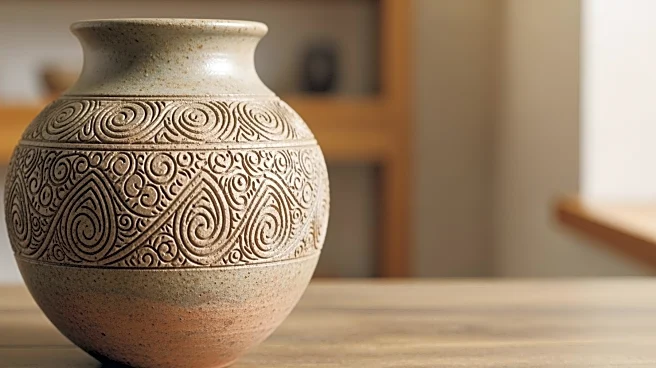
The Leach Pottery museum in St Ives has commenced a restoration project aimed at enhancing the visitor experience by showcasing significant pottery pieces from around the world. Established by Bernard Leach and Shoji Hamada in 1920, the museum is undergoing
a one-year renovation to create a new gallery space. This space will display collections from prestigious institutions such as the Tate, the Victoria and Albert Museum, and the Centre of Ceramic Art in York. The project is designed to cater to both professional experts and newcomers to ceramics, offering insights into the lives of those who have lived and worked at the Leach Pottery. Visitors will have the opportunity to engage with the pottery process from start to finish and create their own clay pieces. The museum has received funding from the National Lottery Heritage Fund, Arts Council England's MEND fund, the Wolfston Foundation, and the Headley Trust.
Why It's Important?
The restoration of the Leach Pottery museum is significant as it aims to preserve and promote the cultural heritage of pottery, an art form with deep historical roots. By enhancing the museum's facilities and expanding its collection, the project seeks to attract a broader audience, including international visitors, thereby boosting cultural tourism in the region. The involvement of major art institutions in the project underscores the importance of ceramics in the broader art world. Additionally, the project provides educational opportunities for visitors to learn about the pottery-making process, potentially inspiring a new generation of ceramic artists. The funding from prominent cultural organizations highlights the project's value in preserving and promoting cultural heritage.
What's Next?
The restoration project is part of a larger two-year initiative that includes the development of a new learning and production center, scheduled to open in early 2026. This center will further enhance the educational offerings of the museum, providing workshops and hands-on experiences for visitors. As the project progresses, it is expected to draw increased attention from art enthusiasts and cultural tourists, potentially leading to collaborations with other museums and cultural institutions. The museum's efforts to collect and share stories from people in Cornwall and beyond will continue, enriching the visitor experience with diverse perspectives on the art of pottery.