

What's Happening?
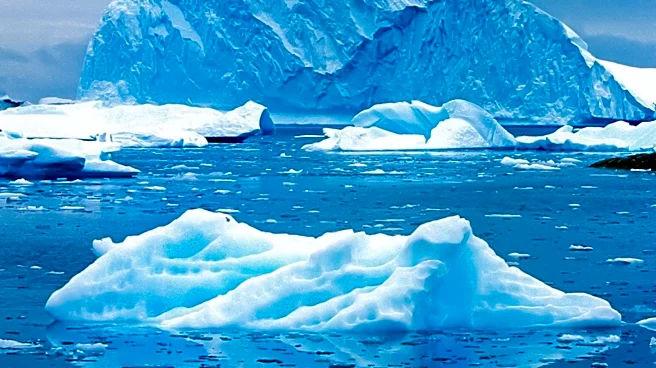
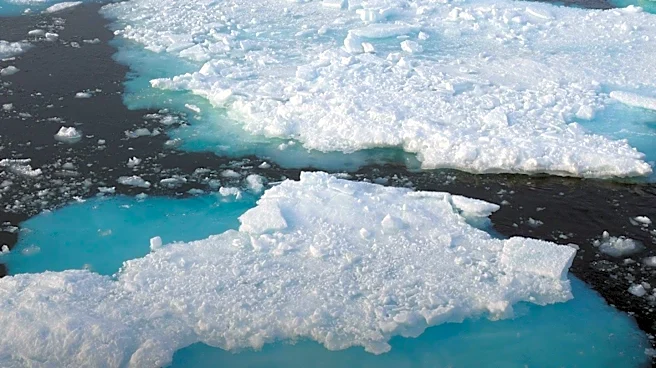
The Arctic is experiencing a dramatic and rapid thinning of its sea ice, with summer sea ice having declined by over 40% since satellite records began. This phenomenon is leading to a 'new Arctic' where the once permanently frozen central region is now
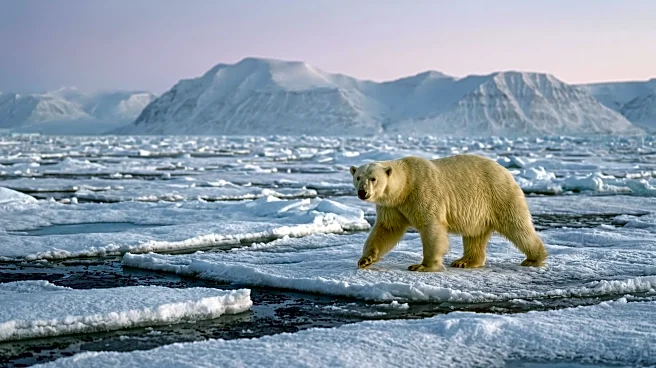
becoming seasonally ice-free, potentially as early as 2035. Scientists from NASA and other research institutions are conducting extensive studies, using flying laboratories and advanced instruments, to understand the forces behind this disappearance. They have observed significant changes, such as a 'dark wedge' of open water advancing towards the North Pole, indicating the ice's weakening. This thinner, more fragile ice is more susceptible to melting and breaking apart due to wind and storms. The Arctic is warming three times faster than the rest of the planet, causing ice to form later in autumn and melt earlier in spring, resulting in longer open water seasons. This shift is profoundly impacting polar ecosystems and has broader implications for global climate regulation.
Why It's Important?
The rapid thinning of Arctic sea ice has profound global implications, affecting climate, ecosystems, and potential economic activities. Sea ice plays a crucial role in regulating Earth's climate by reflecting over 80% of the sun's radiation back into space and controlling ocean circulation. Its disappearance contributes to further warming, creating a feedback loop that accelerates climate change. Ecologically, the loss of sea ice threatens species like krill, which depend on it for shelter and sustenance, and in turn, impacts the entire food web, including whales and seals. Krill also play a vital role in carbon sequestration, drawing carbon dioxide from the atmosphere into the deep ocean. Economically, the opening of trans-Arctic shipping routes, potentially within a decade, presents new opportunities for global markets but also significant environmental risks. Increased shipping traffic brings noise pollution, which disrupts marine mammals' communication and navigation, and raises concerns about potential oil spills and habitat destruction in a fragile ecosystem. The changes also affect indigenous communities, like the Inuit, who rely on stable sea ice for hunting and travel, impacting their traditional way of life and food security.
What's Next?
Scientists will continue their research to better predict the future of the Arctic climate system and its global impacts. Efforts are underway to develop and test innovative solutions, such as the 'Real Ice' project in Nunavut, Canada, which involves flooding sea ice surfaces to encourage thicker ice formation. While such projects show promise for localized areas, scaling them to cover vast stretches of the Arctic presents significant logistical and engineering challenges. International discussions and collaborations will likely intensify regarding the governance and environmental protection of the newly accessible Arctic regions, particularly concerning shipping routes and resource extraction. Policymakers will face increasing pressure to implement measures that mitigate climate change and protect polar ecosystems. The scientific community will also focus on understanding the complex interactions between clouds, ocean warming, and ice melt, as current climate models may be underestimating the warming effect of thin Arctic clouds. The long-term trajectory points towards a continued transformation of the Arctic, necessitating adaptive strategies for both human populations and wildlife.
Beyond the Headlines
The disappearance of Arctic sea ice represents a critical ethical and cultural challenge, highlighting humanity's impact on the planet and the disproportionate effects on indigenous communities. The potential opening of new shipping lanes, while offering economic benefits, raises ethical questions about exploiting a vulnerable environment and the balance between economic gain and ecological preservation. The increased human activity in the Arctic, including shipping and potential resource extraction, will introduce unprecedented levels of noise and pollution into an ecosystem that has historically been isolated and quiet. This shift will fundamentally alter the soundscape of the Arctic Ocean, impacting marine life that relies on sound for survival. Culturally, the changes threaten the traditional practices and livelihoods of indigenous peoples, whose identities are deeply intertwined with the ice and its environment. The 'Real Ice' project, while a technological intervention, also symbolizes a human attempt to actively manage and restore natural systems, prompting deeper reflection on our role in shaping the planet's future. The situation underscores the interconnectedness of global systems, demonstrating that environmental changes in remote regions have far-reaching consequences for all.