
What's Happening?
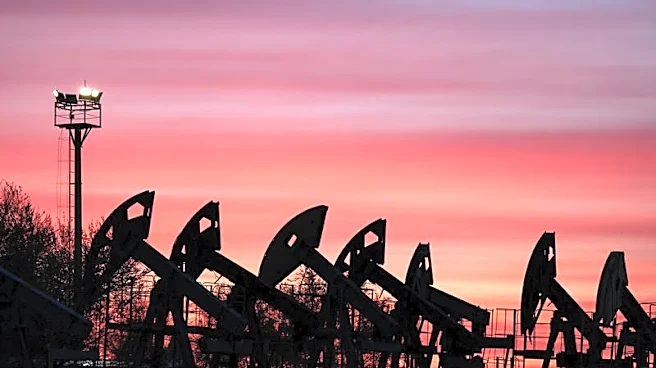
Russia's fuel crisis, exacerbated by Ukraine's drone attacks on Russian refineries, is causing significant disruptions in Central Asia. The region, which has historically relied on Russian fuel imports due to cost-effectiveness, is now facing a shortage
as Russia imposes export restrictions. This has led to a 15-25% increase in retail gasoline prices across Central Asian countries. Kazakhstan and Uzbekistan are attempting to increase their domestic refining capacities, while Kyrgyzstan and Tajikistan, with limited options, are seeking assistance from China, Turkmenistan, Kazakhstan, Azerbaijan, and Belarus. The crisis is also affecting aviation fuel supplies, with Uzbekistan Airways reducing flights to Russia due to rising costs. The situation poses political risks, as energy shortages have previously led to unrest in the region.
Why It's Important?
The fuel crisis highlights the vulnerability of Central Asian countries to external supply shocks, particularly from Russia, which has been a major supplier. The economic impact is significant, with rising fuel prices affecting transportation and agriculture, especially with the autumn harvest approaching. Politically, the crisis could lead to instability, as past energy-related grievances have sparked protests. The situation underscores the need for Central Asian countries to diversify their energy sources and reduce dependency on Russian imports. The crisis also reveals the fragility of regional cooperation, as countries struggle to find a unified response.
What's Next?
Central Asian countries may continue to seek alternative fuel sources and increase domestic refining capacities to mitigate the crisis. The situation could prompt a reevaluation of energy policies and regional cooperation strategies. Additionally, the crisis may influence geopolitical dynamics, as countries like China and Azerbaijan become more involved in supplying fuel to the region. The potential for political unrest remains, as governments face pressure to address the economic and social impacts of the fuel shortages.