





What's Happening?
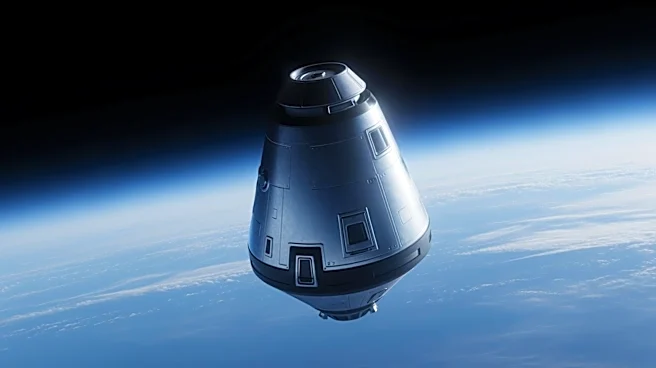
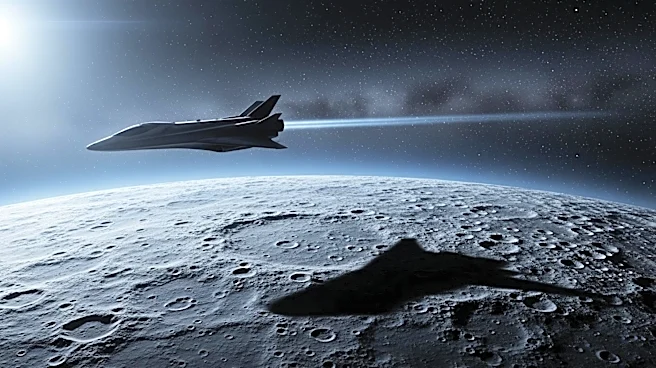
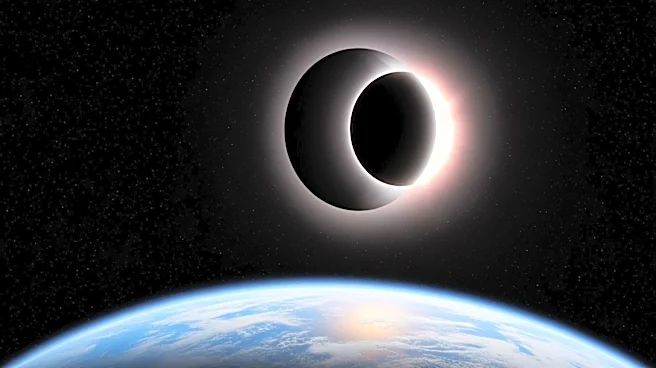
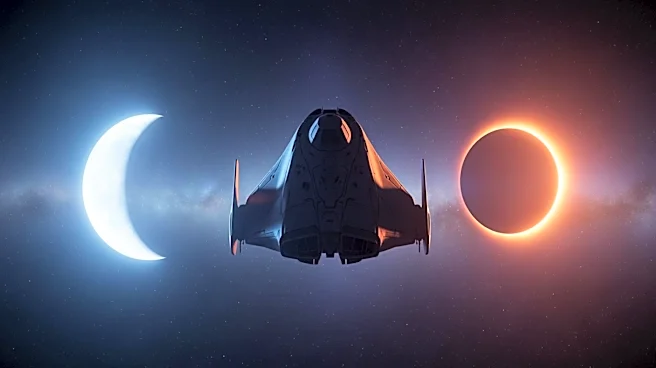
During the Artemis II mission, astronauts aboard the Orion spacecraft observed a rare solar eclipse from beyond the moon. This event, captured in a NASA timelapse video, showed the moon fully obscuring the sun during the spacecraft's far-side lunar flyby.
The eclipse lasted approximately 53 minutes, providing an extended period for observation. The unique vantage point allowed the crew to witness the sun's corona, the outer atmosphere, as a bright halo around the lunar disk. The observation was not affected by Earth's atmospheric distortion, offering high-contrast and detailed views. The eclipse occurred while the spacecraft was behind the moon, resulting in a temporary communications blackout with Earth.
Why It's Important?
The observation of a solar eclipse from deep space offers valuable scientific insights into solar and lunar dynamics. The extended duration of the eclipse, made possible by the Artemis II trajectory, allowed for detailed study of the sun's corona and other celestial phenomena. This data can enhance our understanding of solar activity and its effects on space weather, which is crucial for future space missions. The event also highlights the capabilities of the Orion spacecraft and the potential for future missions to conduct similar observations. Such missions could provide critical information for planning safe and effective human exploration of the moon and beyond.