




What's Happening?
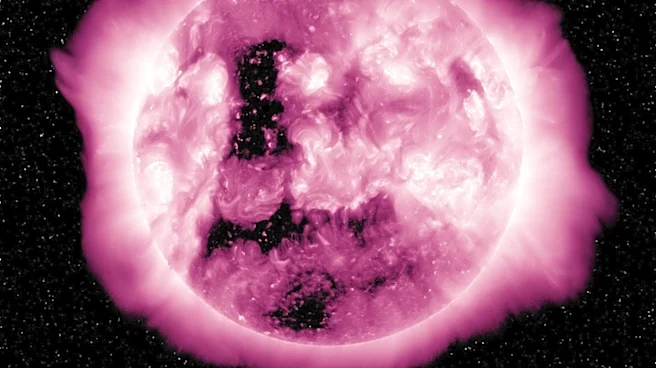
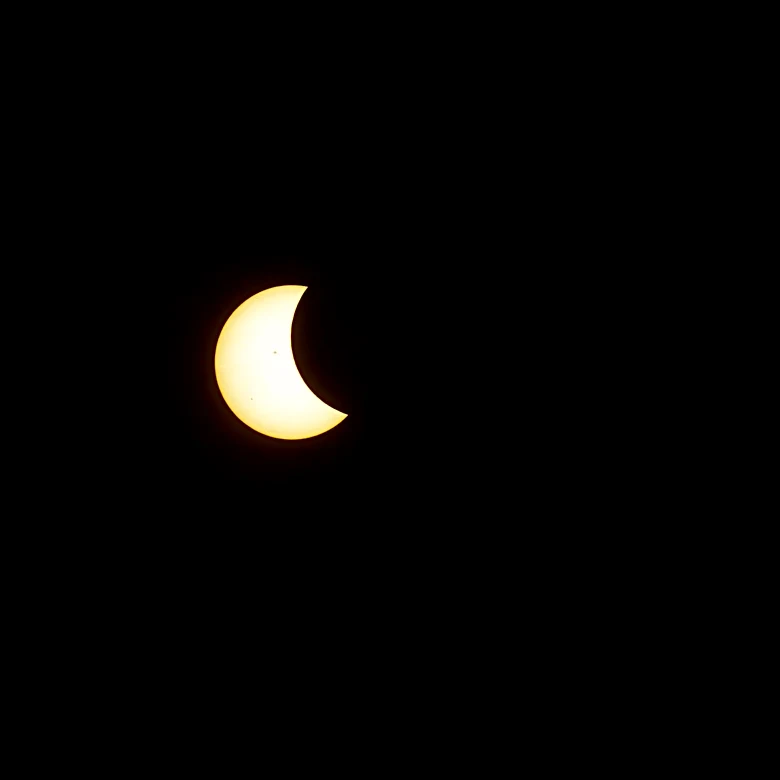
Researchers have introduced a new forecasting method that could predict the strength of the Sun's activity cycle up to seven years before it reaches its peak. This technique focuses on a newly identified 'switch-off' stage in the solar cycle, where the Sun's most
severe space weather ends abruptly. The method has already been used to make an early estimate for Solar Cycle 26, suggesting it could be moderate with a sunspot number between 100 and 120. This prediction is comparable to or possibly weaker than the current Solar Cycle 25. The findings were presented at the Royal Astronomical Society's National Astronomy Meeting. The Sun's cycle, lasting approximately 11 years, involves a reversal of its magnetic field and fluctuating sunspot numbers, which can lead to solar flares and coronal mass ejections affecting Earth's satellites and power grids.
Why It's Important?
The ability to predict solar storms years in advance is crucial for preparing and mitigating the impacts of space weather on Earth. Solar storms can disrupt satellite operations, communication systems, navigation, and power grids, posing significant risks to technological infrastructure. By providing early warnings, this new method allows industries and governments to implement protective measures, potentially saving billions in damages and ensuring the continuity of critical services. The technique also enhances scientific understanding of the solar dynamo, the process that generates the Sun's magnetic field, which is vital for advancing space weather forecasting capabilities.
What's Next?
As Solar Cycle 25 approaches its 'switch-off' point, expected in about two years, researchers anticipate more precise predictions for Solar Cycle 26 based on direct observations. This will refine the current estimates and provide a clearer picture of future solar activity. The scientific community will continue to monitor sunspot movements and the Sun's magnetic field to validate and improve the forecasting model. The ongoing research could lead to more accurate and timely predictions, further enhancing preparedness for solar storms.