
What's Happening?
Saudi Arabia has intensified its military actions in Yemen by conducting airstrikes on positions held by the Southern Transitional Council (STC), a separatist group backed by the United Arab Emirates (UAE).
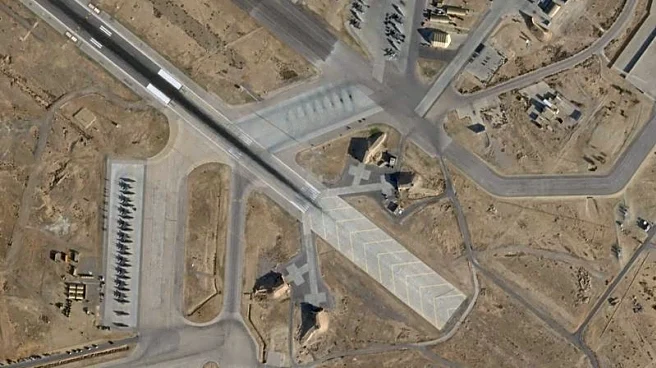
The strikes targeted the Barshid Brigade camp in Mukalla, a strategic location in Hadramout, which was seized by the STC last month. This escalation follows the STC's announcement of a constitution for an independent southern Yemen, further straining relations between Saudi Arabia and the UAE. The UAE has responded by withdrawing its forces from Yemen, a move that highlights the growing rift within the Saudi-led coalition, which aims to support Yemen's internationally recognized government against Houthi rebels. The conflict has resulted in significant casualties and has disrupted operations at key infrastructure sites, including the international airport in Seiyun.
Why It's Important?
The airstrikes and subsequent UAE withdrawal underscore the complex dynamics within the Saudi-led coalition in Yemen. The coalition's internal divisions could weaken its overall effectiveness against Houthi rebels, potentially altering the balance of power in the region. The STC's push for independence in southern Yemen threatens to fragment the country further, complicating efforts to restore a unified government. The situation also reflects broader geopolitical tensions between Saudi Arabia and the UAE, as both nations vie for influence in Yemen and the surrounding region. The conflict's impact on civilian infrastructure and the humanitarian situation in Yemen remains a critical concern, with potential repercussions for regional stability and international diplomatic efforts.
What's Next?
Saudi Arabia plans to host a conference in Riyadh to address the southern Yemen issue, aiming to bring together various factions for dialogue. This initiative could pave the way for negotiations to resolve the separatist conflict and restore stability. However, the success of such talks will depend on the willingness of the involved parties to compromise and the ability of Saudi Arabia to mediate effectively. The ongoing military actions and political maneuvers will likely continue to shape the future of Yemen's governance and regional alliances. Observers will be watching closely for any shifts in the coalition's strategy and the potential for further escalation.
Beyond the Headlines
The conflict in Yemen highlights the broader implications of regional power struggles, particularly between Saudi Arabia and the UAE. The UAE's withdrawal from Yemen may signal a strategic recalibration, focusing on its interests in the Red Sea and beyond. The situation also raises questions about the long-term viability of the Saudi-led coalition and its ability to achieve its objectives. The humanitarian crisis in Yemen, exacerbated by military actions, remains a pressing issue, with millions of civilians affected by the ongoing violence and instability. International efforts to provide aid and support will be crucial in mitigating the conflict's impact on the population.