





What's Happening?
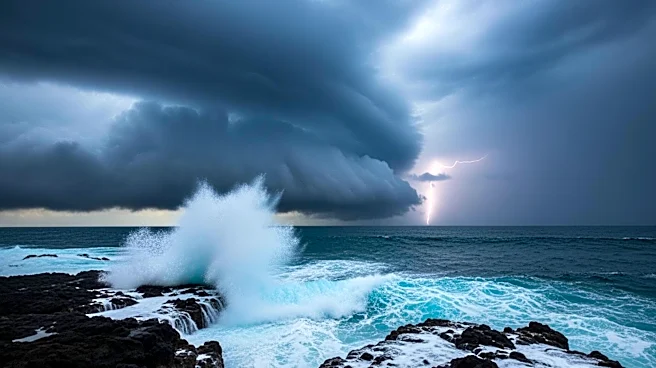
Super Typhoon Sinlaku is nearing the Northern Mariana Islands, expected to make landfall as a Category 4-equivalent storm with sustained winds of around 150 mph. The storm, which had previously reached Category 5-equivalent status, is considered extremely
dangerous by the National Weather Service. A typhoon warning is in place for Saipan, Rota, and Tinian, which are part of the Northern Mariana Islands, a U.S. commonwealth in the Western Pacific. Sinlaku is expected to track near or directly over Tinian or Saipan, with significant impacts on Rota and Guam. The storm's early arrival in the season is attributed to a burgeoning El Niño, which is expected to make the season anomalously active.
Why It's Important?
The arrival of Super Typhoon Sinlaku highlights the potential for an active typhoon season in the Western Pacific, driven by El Niño conditions. The storm poses a significant threat to the Northern Mariana Islands, with forecasts warning of extensive destruction, including damage to infrastructure and potential loss of life. The impact on the islands could lead to prolonged disruptions in electricity and water supply, affecting the local population and economy. The situation underscores the importance of preparedness and resilience in the face of increasingly severe weather events linked to climate patterns.
What's Next?
As Sinlaku continues its path, residents of the Northern Mariana Islands are advised to seek shelter in sturdy, reinforced buildings to withstand the storm's force. The National Weather Service has warned of devastating damage if the forecast track and wind speed hold. The storm is expected to gradually weaken as it moves northward, but the immediate focus remains on ensuring safety and minimizing damage. The broader implications for the typhoon season suggest increased vigilance and readiness for further storms influenced by El Niño.
Beyond the Headlines
The occurrence of Super Typhoon Sinlaku, along with other recent cyclones, signals a shift in weather patterns that could lead to more frequent and intense storms. This trend raises concerns about the long-term impacts of climate change and the need for adaptive strategies in vulnerable regions. The potential for a super El Niño later in the year could exacerbate these conditions, prompting discussions on global climate policy and the role of international cooperation in addressing environmental challenges.