






What's Happening?
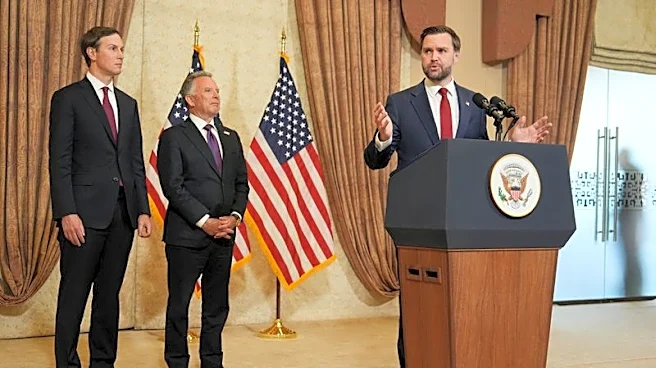
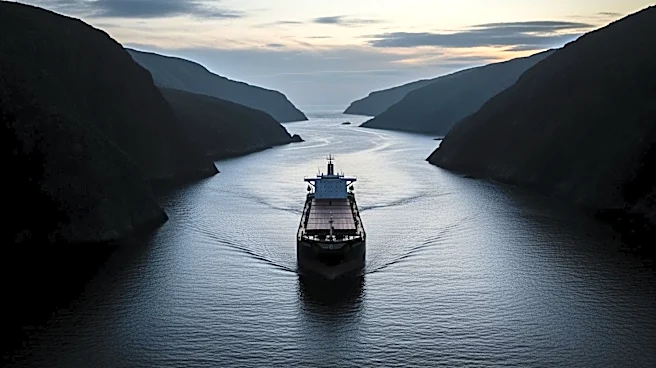
The U.S. military has completely halted maritime trade with Iran, enforcing a blockade as part of ongoing efforts to pressure Tehran. President Trump has expressed optimism about resuming peace talks with Iran, potentially in Pakistan, within the next
two days. The blockade aims to curb Iran's oil exports, which have been crucial for its economy. Despite the blockade, there is hope for diplomatic progress, with discussions focusing on ending the conflict and addressing Iran's nuclear ambitions. Oil prices have reacted to these developments, reflecting market uncertainty.
Why It's Important?
The blockade represents a significant escalation in U.S.-Iran relations, impacting global oil markets and economic stability. The potential for renewed peace talks offers a chance to resolve longstanding issues, including Iran's nuclear program and regional security concerns. Successful negotiations could stabilize oil prices and improve international relations, benefiting economic stakeholders and reducing geopolitical tensions. However, the blockade risks further economic disruption and regional instability if talks fail to produce a resolution.
What's Next?
Negotiations are expected to continue, with Pakistan facilitating discussions between the U.S. and Iran. The outcome of these talks will be crucial in determining the future of U.S.-Iran relations and regional dynamics. Stakeholders, including international organizations and regional governments, are closely monitoring developments. The potential for renewed conflict remains if negotiations falter, highlighting the importance of diplomatic engagement and compromise.