






What's Happening?
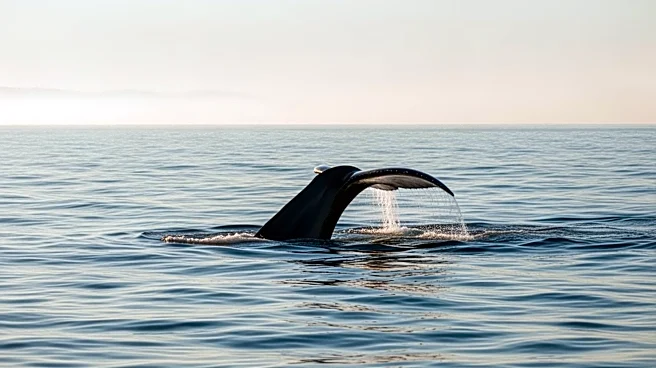
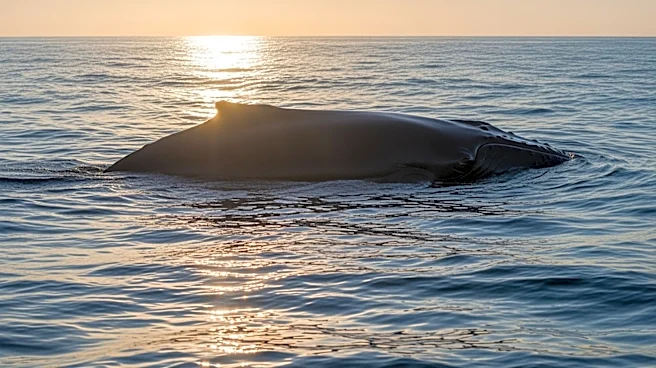
A humpback whale, nicknamed 'Timmy' by German media, was released into the North Sea after being stranded in shallow waters near Germany since March. The whale was first spotted near Germany's Baltic Sea coast, far from its natural Atlantic Ocean habitat.
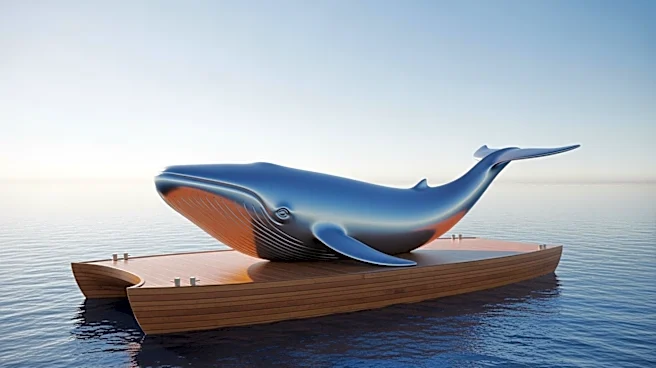
Efforts to guide the whale back to deeper waters were initially unsuccessful, leading to a debate on whether to let it die naturally or attempt a rescue. The environment minister of Mecklenburg-Western Pomerania approved a rescue attempt by a private initiative, despite scientific concerns. The whale was released from a barge 70 kilometers from Skagen, Denmark, with a GPS transmitter attached to monitor its movements.
Why It's Important?
The release of 'Timmy' highlights the challenges and ethical considerations in wildlife rescue operations. The situation drew significant public attention, with protests and debates over the best course of action. The successful release could influence future rescue operations and policies regarding stranded marine animals. It also underscores the importance of international cooperation in wildlife conservation, as the whale's journey involved multiple countries. The incident raises awareness about the potential impacts of environmental changes on marine life, as experts speculate that the whale may have been disoriented by changes in its environment.
What's Next?
The whale's movements will be tracked using the attached GPS transmitter, providing valuable data on its health and behavior post-release. This information could inform future rescue efforts and contribute to scientific understanding of humpback whale migration patterns. The public and scientific community will likely continue to monitor the situation closely, with potential implications for conservation strategies and policies. The incident may also prompt discussions on improving rescue techniques and international collaboration in marine wildlife conservation.