





What's Happening?
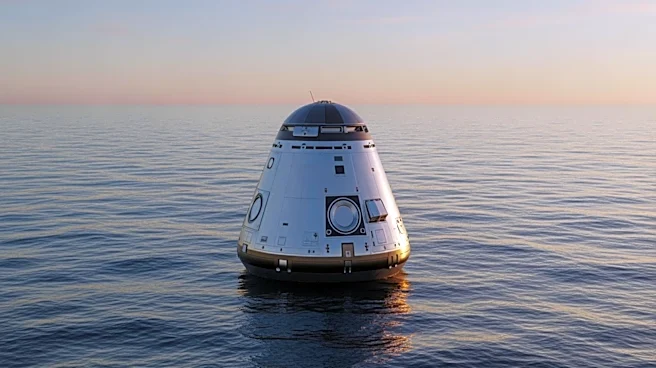
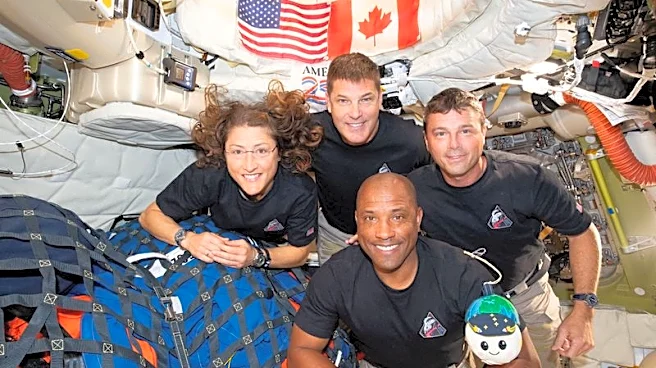
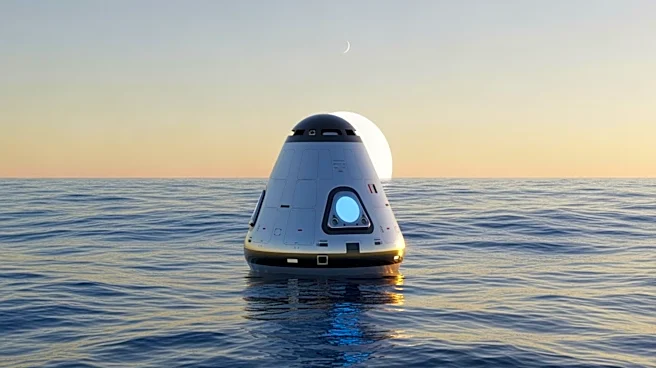
The Artemis II mission, which marked the first crewed lunar flyby in over 50 years, successfully returned to Earth on April 10, 2026. The Orion crew capsule, named Integrity, splashed down in the Pacific Ocean near San Diego at 8:07 PM EDT. The mission involved
astronauts Reid Wiseman, Victor Glover, Christina Koch, and Jeremy Hansen, who traveled around the Moon. During reentry, the capsule endured extreme temperatures and forces, with NASA engineers adjusting the trajectory to ensure the heat shield's integrity and crew safety. Recovery crews aboard the USS John P. Murtha retrieved the astronauts within two hours of splashdown, ensuring their safe return for medical evaluation.
Why It's Important?
The successful completion of the Artemis II mission represents a significant milestone in NASA's efforts to return humans to the Moon and eventually establish a sustainable presence there. This mission tested critical systems and procedures necessary for future lunar missions, including the performance of the Orion capsule's heat shield during reentry. The safe return of the crew demonstrates the reliability of NASA's current space exploration technologies and paves the way for subsequent missions, including Artemis III, which aims to land astronauts on the lunar surface. The mission's success also reinforces international collaboration in space exploration, as Canadian astronaut Jeremy Hansen was part of the crew.
What's Next?
Following the successful splashdown, the Artemis II crew will undergo medical evaluations and debriefings at NASA's Johnson Space Center in Houston. The insights gained from this mission will inform the planning and execution of Artemis III, which is scheduled to land astronauts on the Moon. NASA will continue to refine its technologies and strategies for lunar exploration, focusing on sustainability and long-term presence. The agency will also work on developing the Gateway lunar outpost, which will support future missions and serve as a staging point for deep space exploration.
Beyond the Headlines
The Artemis II mission highlights the evolving role of international partnerships in space exploration, with Canada contributing an astronaut to the crew. This collaboration reflects a broader trend towards multinational efforts in space, which can enhance technological innovation and share the financial burden of ambitious projects. Additionally, the mission underscores the importance of advancing space technology to ensure the safety and success of future missions, particularly in the context of human spaceflight beyond low Earth orbit.