





What's Happening?
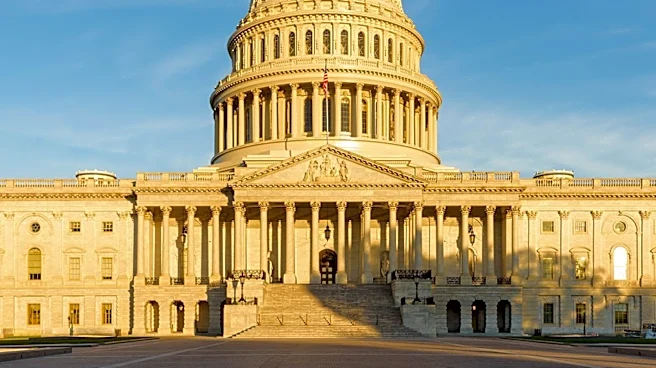
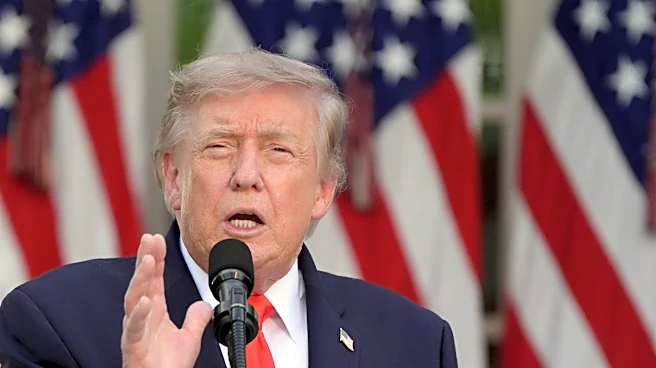
President Trump has been actively pushing for the passage of the SAVE America Act, a bill that mandates proof of citizenship for voter registration in federal elections. This push has led to the stalling of other legislative efforts, including a bipartisan
housing cost reduction bill. The SAVE America Act requires documentary proof of U.S. citizenship, such as passports or birth certificates, to register to vote. It also mandates photo ID for voting and requires states to remove noncitizens from voter rolls. The bill has faced significant opposition in the Senate, lacking the 60 votes needed to overcome a filibuster. Despite this, President Trump believes the act is crucial for ensuring Republican electoral success, based on claims of noncitizen voting, which experts say are largely unfounded.
Why It's Important?
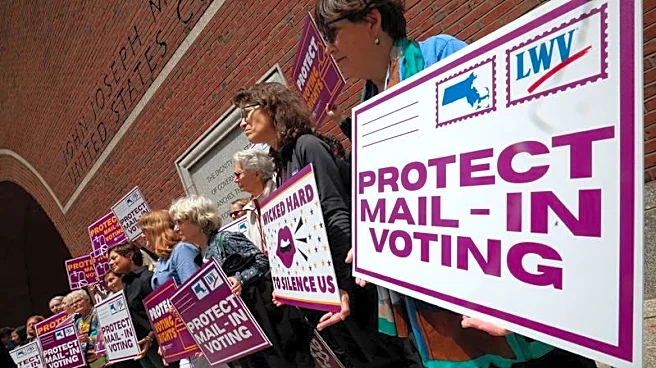
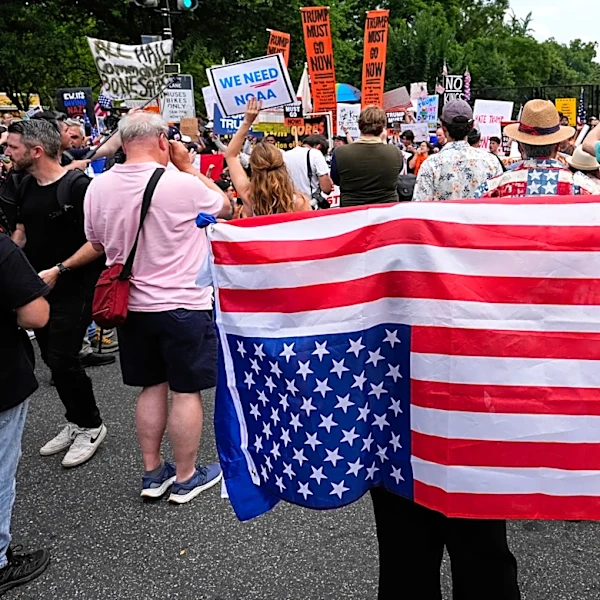
The SAVE America Act represents a significant shift in voting regulations, potentially impacting millions of voters who may struggle to provide the required documentation. Critics argue that the bill could disenfranchise eligible voters, particularly those who lack easy access to citizenship documents. The act's emphasis on voter ID and citizenship proof aligns with broader Republican efforts to tighten voting laws, which they argue are necessary to prevent voter fraud. However, these measures are controversial and have been criticized for potentially suppressing voter turnout among minority and low-income groups. The ongoing debate over the act highlights the deep partisan divides over voting rights and election integrity in the U.S.
What's Next?
The future of the SAVE America Act remains uncertain, as it currently lacks sufficient support in the Senate. Republican leaders are hesitant to eliminate the filibuster to pass the bill, despite President Trump's urging. If the act does not pass, it could lead to further legislative gridlock, as Trump has indicated he will not sign other bills until the act is approved. This standoff may affect upcoming midterm elections, with potential implications for both parties. The ongoing legal battles over voter registration and data sharing with the federal government are likely to continue, as states resist federal demands for voter roll information.