








What's Happening?
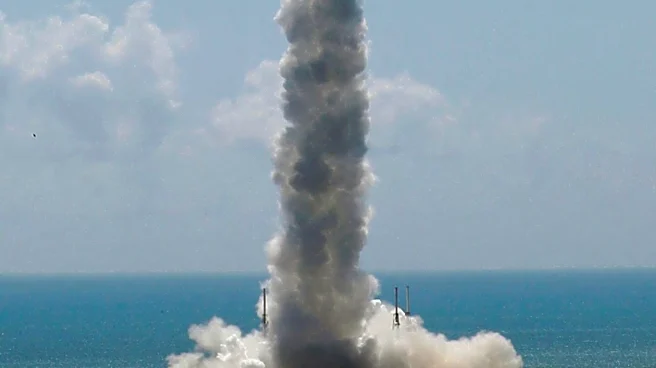
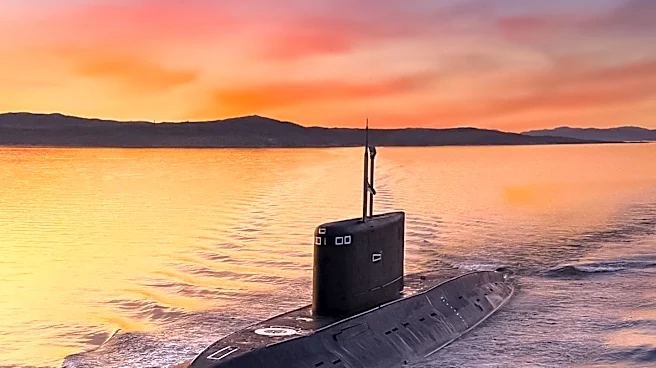
China announced a rare launch of an intercontinental ballistic missile from a nuclear submarine in the Pacific Ocean, raising concerns in the West and Indo-Pacific region. This test, the first of its kind by China in over two years, is seen as a sign
of Beijing's accelerating military buildup. The missile, believed to be a JL-3, was launched as part of China's annual military training program. The test coincides with China's expansion of its nuclear arsenal, with projections of reaching 1,000 warheads by 2030. Regional countries, including Australia, Japan, and New Zealand, have condemned the test, viewing it as destabilizing.
Why It's Important?
The test highlights China's growing military capabilities and its potential to strike the continental United States. It raises concerns about China's intentions in the region, particularly regarding Taiwan and disputed maritime routes. The test also reflects China's strategic shift towards a more assertive military posture, challenging U.S. influence in the Indo-Pacific. The expansion of China's nuclear arsenal and its military activities could lead to an arms race, increasing tensions and instability in the region. The test underscores the need for international dialogue on arms control and regional security.
What's Next?
The U.S. and its allies may increase diplomatic efforts to address China's military activities and seek to strengthen regional security alliances. Further missile tests by China could prompt a reevaluation of defense strategies by the U.S. and its partners. The test may lead to increased military cooperation among Indo-Pacific countries to counterbalance China's influence. International forums may see renewed discussions on nuclear proliferation and arms control, with calls for greater transparency and engagement from China.