
What's Happening?
Georgia has extended its annual wild oyster harvest closure beyond the typical September 30th end date due to unusually warm ocean temperatures. This marks only the second time the state has prolonged the closure, with the previous instance occurring
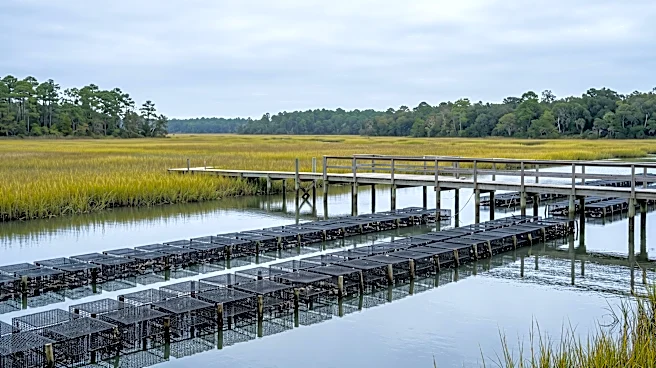
in 2018. The Georgia Department of Natural Resources (DNR) manages the shellfish and water quality program, and Dominic Guadagnoli, who oversees the program, noted that a very hot summer and the absence of major storms, which typically cool waters, contributed to the extended warmth. Warm water conditions facilitate the proliferation of dangerous bacteria, making raw oysters unsafe for consumption. While the closure applies to wild oysters, a significant change since 2018 is the implementation of a formal system for oyster farming. This allows permitted farms, such as Tybee Oyster Company, to continue harvesting by controlling conditions for their oysters, ensuring safety through methods like keeping them submerged and shaded.
Why It's Important?
The extended oyster harvest closure has direct implications for public health and the local seafood industry in Georgia. The primary concern is preventing foodborne illnesses caused by bacteria that thrive in warmer waters, safeguarding consumers who might otherwise consume contaminated wild oysters. For the wild oyster harvesting community, this extension means a continued loss of income and disruption to their livelihoods. However, the development of oyster farming, which allows for controlled harvesting during closures, highlights a growing resilience and adaptation within the industry. This distinction between wild and farmed oysters is crucial, as it demonstrates how technological advancements and regulatory frameworks can mitigate the economic impact of environmental challenges. The situation also underscores the broader effects of climate patterns, such as unusually warm summers and fewer cooling storms, on natural resources and economic sectors dependent on them.
What's Next?
Officials from the Georgia Department of Natural Resources will continue to closely monitor ocean temperatures. The wild oyster harvest will only be reopened once water conditions are deemed safe, indicating a reduction in bacterial risk. This means the duration of the extension is dependent on environmental factors. For oyster farmers operating under permits, such as Tybee Oyster Company, harvesting will proceed as usual, providing a consistent supply of safe oysters to the market. This ongoing situation may prompt further discussions about climate change adaptation strategies within Georgia's seafood industry and potentially lead to increased investment in controlled aquaculture methods. The state may also consider reviewing its protocols for environmental monitoring and public health advisories in response to changing climate patterns to ensure long-term sustainability and safety.
Beyond the Headlines
The extended oyster harvest closure in Georgia serves as a tangible example of how climate change and environmental shifts directly impact local economies and public health. The reliance on natural cooling mechanisms, such as storms, highlights the vulnerability of traditional harvesting practices to altered weather patterns. The emergence of oyster farming as a viable alternative during these closures points to a broader trend of innovation and adaptation in industries facing environmental pressures. This shift could lead to a more sustainable and resilient seafood sector, but it also raises questions about equitable access to such technologies and the potential displacement of traditional wild harvesters. Furthermore, the incident underscores the importance of robust scientific monitoring and responsive regulatory frameworks to protect both natural resources and human well-being in the face of evolving environmental challenges. It also brings to light the interconnectedness of ecological health, economic stability, and public safety.