


What's Happening?
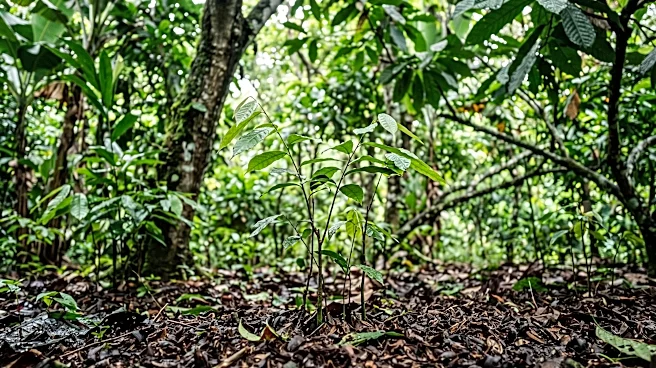
A recent study conducted by scientists from CIRAD and Félix Houphouët-Boigny University in Ivory Coast has revealed that cocoa plantings in the southern region of the country are home to at least 1.05 billion young wild trees. These trees, representing
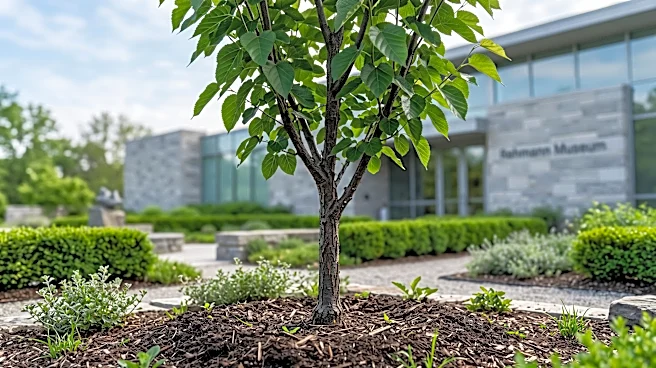
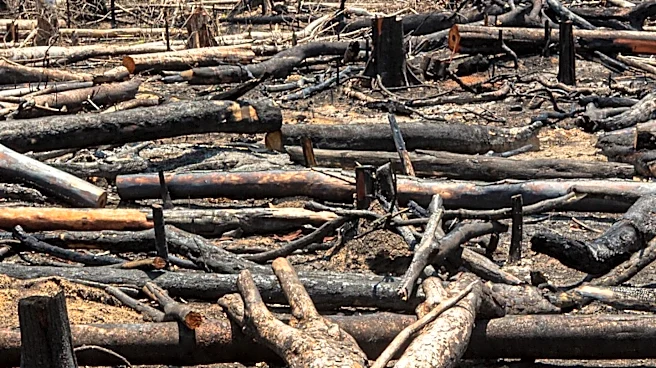
272 different species, have primarily grown from seeds dispersed by animals and wind. This discovery highlights a significant, previously under-recognized natural resource that could play a crucial role in the nation's forest restoration efforts. Ivory Coast has experienced substantial deforestation, with its forest cover shrinking from approximately 16 million hectares in the early 20th century to less than 3 million hectares today, largely due to agricultural expansion. The findings suggest that traditional reforestation programs, which typically involve nursery-grown plants, could be complemented by leveraging this existing natural regeneration within agricultural landscapes. The study involved a large-scale field inventory across 145 cocoa plantings in 15 sites, where 725 plots were inventoried to record and identify young wild trees less than 10 centimeters in diameter.
Why It's Important?
This discovery is important because it offers an economical and potentially more sustainable approach to forest restoration in Ivory Coast, a country grappling with severe deforestation. By recognizing and fostering the natural regeneration within cocoa agro-ecosystems, the nation can enhance its efforts to increase forest cover, aligning with its policy for forest preservation, rehabilitation, and extension (PPREF, 2018) and its implementation strategy (SPREF 2019-2030), which aims for at least 20% national forest cover. The study indicates that preserving adult trees in cocoa plantings leads to more abundant and diverse natural regeneration, suggesting a shift in agricultural management practices could yield significant environmental benefits. This approach could reduce reliance on costly nursery-based planting programs and promote biodiversity within agricultural landscapes, benefiting both the environment and potentially the long-term sustainability of cocoa farming.
What's Next?
The findings suggest a shift in focus for future forest restoration initiatives in Ivory Coast, moving beyond solely planting new trees to actively identifying, protecting, and supporting existing young wild trees within cocoa plantings. This 'assisted natural regeneration' could become a primary strategy for agroforest transition. Researchers recommend that policymakers and agricultural stakeholders integrate these findings into national forestry policies, particularly within the framework of the SPREF 2019-2030, which already prioritizes agroforestry. Further research, such as that conducted under the Cocoa4Future project, will likely continue to explore the dynamics of natural forest regeneration in the region. The emphasis will be on developing practical guidelines for cocoa farmers to manage their land in a way that promotes both cocoa production and forest regeneration, potentially leading to more resilient and biodiverse agricultural systems.
Beyond the Headlines
Beyond the immediate environmental benefits, this research highlights a broader paradigm shift in conservation—from solely focusing on pristine natural areas to recognizing the ecological value and restoration potential within human-modified landscapes. The presence of over a billion naturally regenerating trees in cocoa plantations challenges the notion that agricultural areas are 'ecological dead ends.' This perspective could influence agricultural policies globally, encouraging practices that integrate biodiversity conservation with food production. It also underscores the importance of traditional ecological knowledge and the role of local farmers in maintaining and enhancing natural ecosystems. The study's emphasis on preserving adult trees within plantations suggests a more holistic approach to land management, where economic activities like cocoa farming can coexist with and even contribute to ecological restoration, fostering a more sustainable relationship between agriculture and the environment.