





What's Happening?
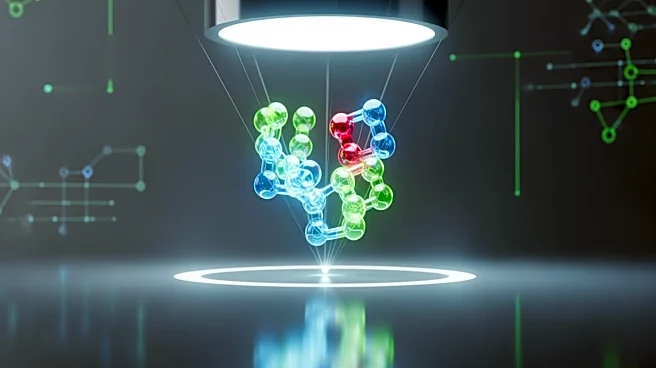
A research team from the Korea Advanced Institute of Science and Technology (KAIST) has successfully developed a protein that can selectively recognize the stress hormone cortisol using a deep learning-driven protein structure generation and sequence
design method. This innovation involves the de novo design of small molecule-binding proteins, which are transformed into sensors similar to chemical-induced dimerization (CID). The team utilized the NTF2-like fold as the core universal backbone to achieve high affinity and specificity in biosensing applications. This breakthrough addresses the longstanding challenge in life sciences and synthetic biology of designing proteins with both high affinity and specificity for small molecules. The research results have been published in Nature Communications, highlighting the potential applications in disease diagnosis, new drug development, and environmental monitoring.
Why It's Important?
The development of AI-driven proteins capable of recognizing specific stress hormones like cortisol represents a significant advancement in biosensing technology. This innovation could have profound implications for various fields, including healthcare, pharmaceuticals, and environmental science. By enabling precise detection of cortisol levels, the technology could improve diagnostic processes for conditions such as Cushing's syndrome, which is characterized by elevated cortisol levels. Furthermore, the ability to design proteins with customized functions through AI could accelerate drug development and enhance environmental monitoring by providing more accurate and reliable sensing mechanisms. This approach marks a shift from traditional methods that relied on natural protein modification, offering a scalable and universal solution to molecular recognition challenges.
What's Next?
The research team plans to further optimize the protein design to improve selectivity for hydrophobic ligands and distinguish structurally similar molecules. The next steps involve refining the biosensor construction to enhance its practical applications in real-world scenarios. Potential collaborations with telehealth clinics and diagnostic companies could expand the use of this technology in personalized treatment plans. Additionally, the team may explore the integration of this biosensor technology into existing medical devices and diagnostic tools, potentially revolutionizing the way stress-related conditions are monitored and treated.
Beyond the Headlines
The ethical implications of AI-driven protein design are significant, as this technology could lead to personalized medicine tailored to individual hormonal profiles. However, it also raises questions about data privacy and the potential misuse of sensitive health information. The cultural impact of such advancements may shift public perception of AI in healthcare, fostering greater acceptance and trust in technology-driven medical solutions. Long-term, this development could influence regulatory policies surrounding AI applications in biotechnology, necessitating new frameworks to ensure safety and efficacy.