







What's Happening?
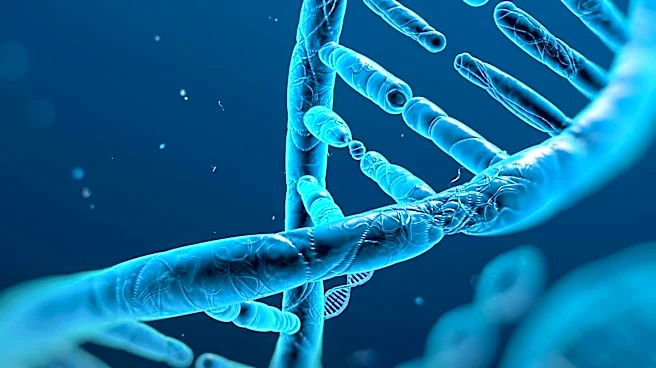
The CRISPR-Cas9 genome engineering technology is based on a natural defense mechanism found in many bacteria. Bacteria incorporate short segments of foreign DNA from invading viruses and plasmids into their own genomes, creating 'CRISPR' regions. These
regions serve as a memory, allowing bacteria to recognize and defend against similar invaders in the future. The CRISPR segments are expressed as CRISPR RNAs (crRNAs) that match foreign DNA. These crRNAs, in conjunction with a second RNA molecule called tracrRNA, bind to the invading DNA and recruit the Cas9 enzyme, which then dismantles the foreign genetic material. Key steps of this mechanism were elucidated by Emmanuelle Charpentier and her group at the University of Vienna and Umeå University, with a breakthrough study in 2012 demonstrating that this system could be engineered into a simple, programmable two-component system for site-specific genome editing.
Why It's Important?
The CRISPR-Cas9 system has revolutionized genetic engineering due to its simplicity and programmability, allowing scientists to precisely bind and cleave any DNA sequence of interest. This has led to an explosion of applications, particularly in site-specific genome editing across numerous species. Its impact on biomedical research is immense, offering unprecedented tools for understanding and potentially treating a wide range of conditions, from cancer and aging to inherited genetic disorders. The technology also holds significant promise for applications in agriculture, such as developing disease-resistant crops or enhancing desirable traits. The ability to accurately modify genes opens new avenues for therapeutic interventions and fundamental biological discoveries, making it a cornerstone of modern biotechnology.
What's Next?
The future of CRISPR-Cas9 technology involves continued refinement and expansion of its applications. Researchers are exploring new variations of the system to enhance precision, reduce off-target effects, and broaden the range of editable genetic material. Clinical trials using CRISPR-Cas9 for treating human diseases, such as sickle cell anemia and certain cancers, are ongoing and expected to yield more results. Further developments may include in vivo gene editing therapies, where the CRISPR components are delivered directly into the body. Additionally, ethical discussions surrounding germline editing and the societal implications of altering human DNA will continue to evolve, shaping regulatory frameworks and public perception. The technology is also being adapted for diagnostic tools and advanced agricultural solutions.
Beyond the Headlines
Beyond its immediate applications, CRISPR-Cas9 technology raises profound ethical, legal, and societal questions. The ability to precisely edit the human genome brings us closer to potentially eradicating genetic diseases, but also opens debates about 'designer babies' and unintended consequences of altering the human germline. The accessibility and cost of such advanced genetic therapies could exacerbate existing health inequalities. Furthermore, the potential for misuse, such as creating biological weapons, necessitates robust international governance and ethical guidelines. The technology also challenges our understanding of human identity and what it means to be human, as we gain the power to rewrite the fundamental code of life. The ongoing development of CRISPR-Cas9 will require continuous dialogue among scientists, ethicists, policymakers, and the public to navigate its transformative potential responsibly.