






What's Happening?
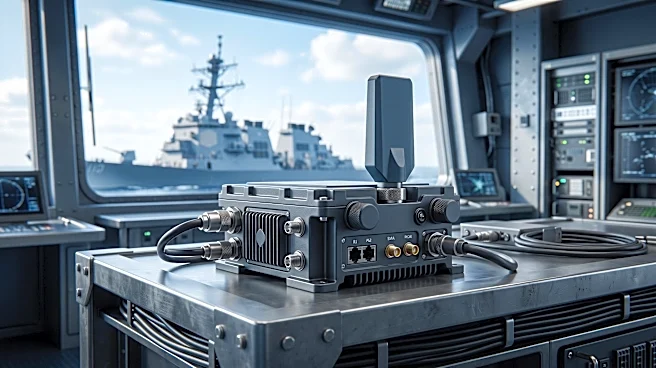
L3Harris Technologies has successfully completed operational testing of its FleetLink communications system aboard a U.S. Navy Arleigh Burke-class Destroyer. The FleetLink system is a high-speed, modular communications solution designed to replace legacy
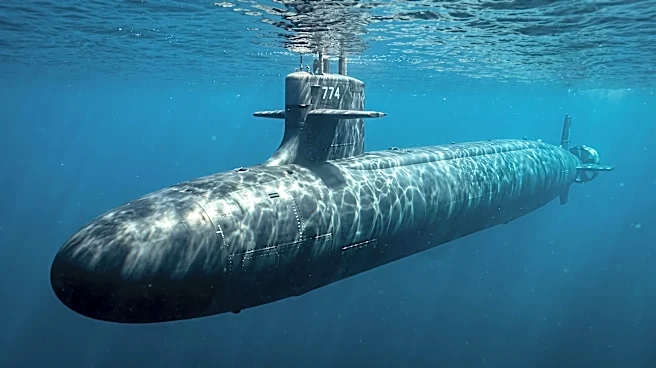
communication systems by integrating data from multiple sources. It incorporates L3Harris radios and waveforms and features the latest NSA-certified cryptographic capability to enhance secure information exchange. According to Faisal Munir, President, Mission Critical Communications, Communications & Spectrum Dominance at L3Harris, the system's performance under real-world conditions is crucial for ensuring combat readiness and providing seamless surface and undersea communications for naval commanders. L3Harris developed FleetLink under the Navy’s Scalable, Modular, Radio Cluster contract, awarded in 2023. The system is available in three configurations: a four-channel high-frequency variant, a four-channel multi-band variant, and a submarine multi-band variant, all aimed at advancing the Navy’s goal for resilient and reliable communication across its platforms.
Why It's Important?
The successful operational testing of L3Harris's FleetLink system marks a significant step forward for U.S. naval communication capabilities. This development is critical for national security as it directly addresses the Navy's need for enhanced interoperability and secure information exchange in increasingly complex operational environments. By replacing outdated systems, FleetLink improves the speed and reliability of communications, which is vital for command and control, intelligence sharing, and overall combat effectiveness. The integration of NSA-certified cryptography ensures that sensitive information remains protected, reducing vulnerabilities to adversaries. This advancement benefits the U.S. defense industry by demonstrating L3Harris's capability to deliver advanced technological solutions, potentially leading to further contracts and strengthening the company's position as a key defense contractor. For the Navy, it means improved operational readiness and a more robust communication infrastructure, essential for maintaining its global presence and responding to emerging threats.
What's Next?
Following the successful operational testing, the U.S. Navy will likely proceed with further integration and deployment plans for the FleetLink system across its fleet. This could involve broader implementation on other Arleigh Burke-class Destroyers and potentially other vessel types, depending on the system's scalability and adaptability. L3Harris Technologies may also leverage this successful demonstration to pursue additional contracts with the Navy and other branches of the U.S. military, as well as international allies seeking similar advanced communication solutions. The company will likely focus on refining the system based on feedback from the operational tests and exploring further enhancements to its capabilities, such as integrating new waveforms or expanding its multi-band functionalities. Continued collaboration between L3Harris and the Navy will be crucial to ensure the system evolves with future operational requirements and technological advancements.
Beyond the Headlines
The deployment of advanced communication systems like FleetLink has broader implications for military strategy and technological competition. Enhanced interoperability and secure communications are foundational to the U.S. military's concept of Joint All-Domain Operations (JADO), which aims to seamlessly connect forces across all operational domains—space, air, land, sea, and cyber. FleetLink's capabilities contribute directly to this vision, enabling more coordinated and effective responses to threats. Furthermore, the continuous upgrade of defense communication infrastructure highlights the ongoing technological arms race, where maintaining a qualitative edge in secure and resilient communications is paramount. This also underscores the critical role of private defense contractors like L3Harris in driving innovation and supplying the U.S. military with the tools necessary to maintain its strategic advantage in a rapidly evolving global security landscape.