

What's Happening?
China is set to launch its first one-year human spaceflight mission, with an astronaut from the Shenzhou-23 crew expected to remain aboard the Tiangong space station for a full year. This mission marks a significant milestone in China's space exploration
efforts, providing valuable data on human health and performance in microgravity. Additionally, a Pakistani astronaut will participate in a short-duration mission to the Tiangong space station, highlighting China's commitment to international cooperation in space exploration. The mission is part of China's broader strategy to enhance its space capabilities and establish a presence in deep space missions.
Why It's Important?
China's one-year space mission represents a major advancement in its space exploration capabilities, positioning the country as a key player in international space research. The inclusion of a Pakistani astronaut underscores China's efforts to foster international partnerships and collaboration in space exploration. This mission could have significant implications for global space policy and the balance of power in space exploration, as China continues to expand its influence in the field. The data collected from the mission will contribute to future deep space missions and enhance understanding of long-duration space travel.
What's Next?
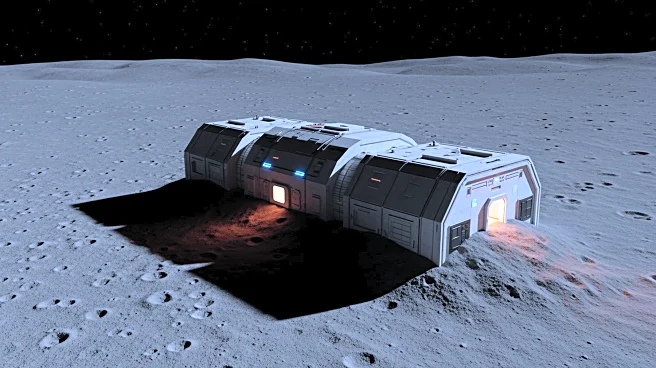
Following the one-year mission, China plans to continue its efforts to land astronauts on the moon by 2030. The development of lunar landing hardware and ground infrastructure will be a priority, as China aims to establish a sustainable presence on the moon. The success of the one-year mission could lead to further international collaborations and partnerships in space exploration, potentially influencing global space policy and research initiatives.