



What's Happening?
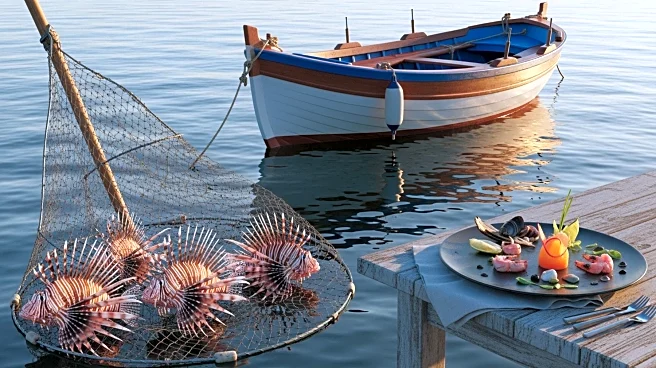
In Cyprus, fishermen are facing challenges due to the invasion of lionfish, a species that has migrated from the Red Sea to the Mediterranean. The lionfish, known for its venomous spikes and vibrant colors, poses a threat to local fish stocks, impacting
the livelihoods of approximately 150 professional fishermen in the region. The warming waters of the Mediterranean, exacerbated by climate change, have facilitated the spread of this invasive species. In response, local fishermen, supported by EU initiatives, are attempting to mitigate the impact by promoting lionfish as a culinary delicacy. Efforts include a social media campaign, #TasteTheOcean, which encourages the consumption of invasive species. Despite the challenges, some taverns in Cyprus have started incorporating lionfish into their menus, offering it as a competitively priced alternative to more traditional fish like sea bass.
Why It's Important?
The invasion of lionfish in the Mediterranean highlights the broader issue of climate change and its impact on marine ecosystems. As the waters warm, invasive species like the lionfish are able to thrive, threatening local biodiversity and the economic stability of fishing communities. The situation in Cyprus serves as a microcosm of the challenges faced by the global fishing industry, where invasive species and environmental changes are leading to decreased fish stocks and increased operational costs. The initiative to market lionfish as a delicacy not only provides a potential economic opportunity for fishermen but also raises awareness about the need for adaptive strategies in the face of environmental changes. This approach could serve as a model for other regions dealing with similar ecological disruptions.
What's Next?
Moving forward, the success of the campaign to promote lionfish as a culinary option will be crucial in determining the viability of this strategy as a long-term solution. Continued support from the European Union, including compensation programs and public awareness campaigns, will be essential in managing the impact of invasive species. Additionally, ongoing research and monitoring of the Mediterranean's ecosystem will be necessary to understand the full extent of climate change's impact and to develop further adaptive measures. The situation also calls for international cooperation, as the spread of invasive species is a transboundary issue that affects multiple countries in the region.
Beyond the Headlines
The introduction of lionfish into the Mediterranean ecosystem raises ethical and ecological questions about human intervention in natural processes. While promoting the consumption of invasive species may provide short-term economic relief, it also underscores the need for sustainable fishing practices and environmental stewardship. The situation in Cyprus could lead to a broader discussion on the balance between economic development and environmental conservation, particularly in regions heavily dependent on natural resources. Furthermore, the cultural shift towards accepting new food sources highlights the adaptability of human societies in the face of changing environmental conditions.