









What's Happening?
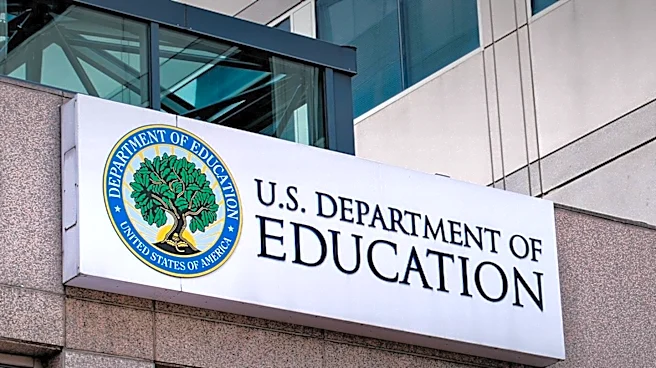
The Trump administration has expanded the list of graduate degrees eligible for higher federal student loan borrowing limits following a recent court ruling. Under the 'one big beautiful bill act,' new graduate students are subject to an annual loan cap
of $20,500, while professional students can borrow up to $50,000 annually. A federal judge in Washington blocked the U.S. Department of Education's narrow definition of 'professional degree,' which initially limited the higher borrowing limits to 11 programs. The Education Department has now published an updated list of over 20 professional degrees, including nursing and psychology, that qualify for the higher borrowing limits. This change is significant for many graduate students, particularly women, who make up over 70% of graduates in programs previously excluded from the higher borrowing limits.
Why It's Important?
The expansion of borrowing limits for graduate students is crucial as it allows more students to access necessary funding for their education. This decision particularly benefits women, who are disproportionately represented in programs that were initially excluded from the higher borrowing limits. The court's intervention ensures that the Department of Education adheres to Congress's broader definition of professional degrees, potentially increasing educational opportunities and reducing financial barriers for students pursuing advanced degrees. This development could have long-term implications for the workforce, as more students may now afford to complete their education in high-demand fields such as healthcare and psychology.
What's Next?
The Department of Education will continue to defend its original definition of professional degrees in court. If the Trump administration prevails, the narrower definition could be reinstated, potentially affecting the borrowing capabilities of students in certain programs. Institutions may need to adjust their financial aid policies in response to ongoing litigation and potential changes in program classification. Stakeholders, including educational institutions and advocacy groups, will likely continue to monitor the situation closely and advocate for policies that support student access to education funding.