






What's Happening?
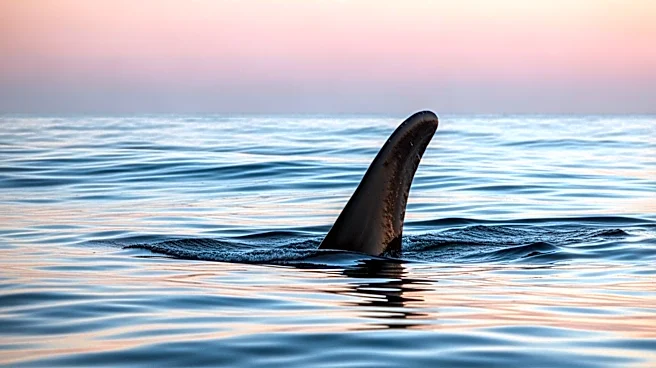
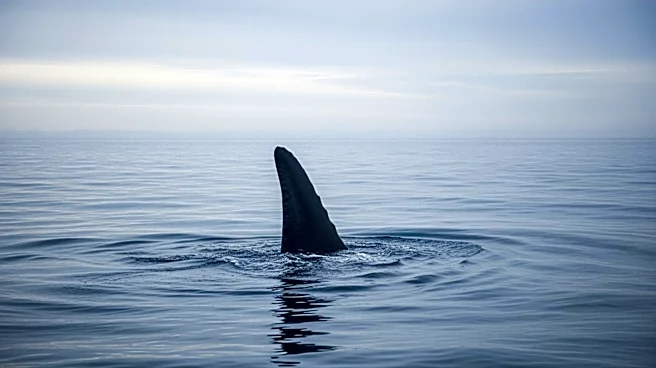
A young humpback whale, nicknamed Timmy, has been stranded in shallow waters off the Baltic coast in Germany for over a month. Efforts to rescue the whale have been criticized by the International Whaling Commission (IWC), which labeled the attempts as 'inadvisable.'
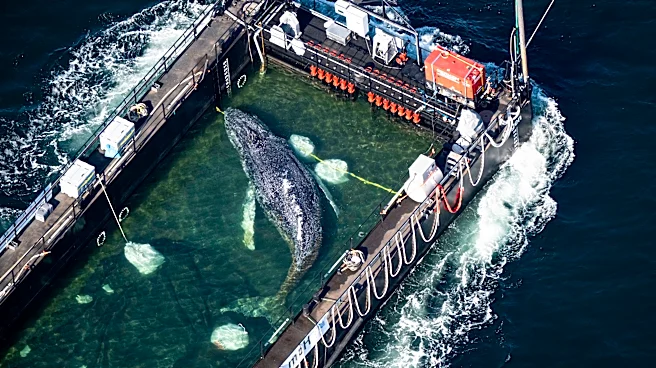
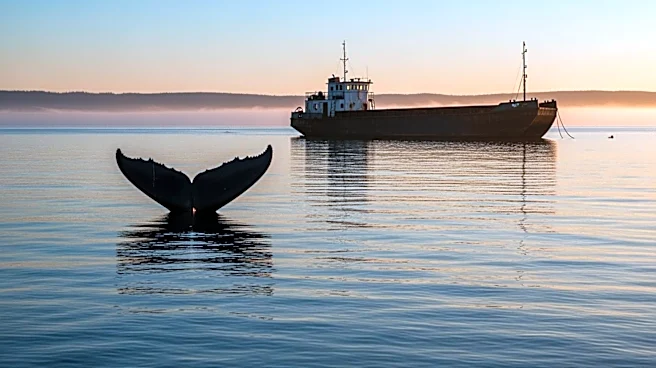
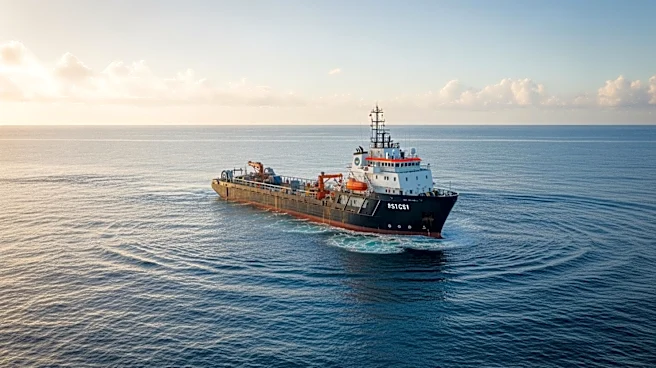
The whale, which swam onto a sandbank, has been repeatedly stranded, leading to a deterioration in its health. Recently, divers managed to help the whale onto a flooded barge, which has now reached Danish waters en route to the North Sea. Despite these efforts, the IWC's expert panel has expressed doubts about the whale's survival, citing its severely compromised condition. The rescue mission, funded by two multimillionaires, has sparked national interest, with supporters engaging in various activities to show their support.
Why It's Important?
The situation highlights the complexities and ethical considerations involved in wildlife rescue operations. The IWC's stance underscores the potential risks associated with such interventions, both for the animal and the rescuers. The case has drawn significant public attention, reflecting society's deep emotional connection to marine life and the lengths to which people will go to save an endangered animal. However, experts warn that continued attempts to save the whale may cause more harm than good, raising questions about the balance between human intervention and natural processes. The incident also brings to light the challenges faced by conservationists in making decisions that prioritize animal welfare while managing public expectations.
What's Next?
The whale's future remains uncertain as it continues its journey towards the North Sea. The IWC has advised against releasing the whale into open waters due to the risk of drowning. The organization has called for transparency from the rescue team, including sharing data on the whale's condition and location. If the whale does not survive, the IWC recommends a detailed necropsy to understand the causes of its stranding and to safely dispose of its remains. The outcome of this rescue attempt may influence future protocols and guidelines for handling similar situations, potentially impacting international policies on marine wildlife rescue.