



What's Happening?
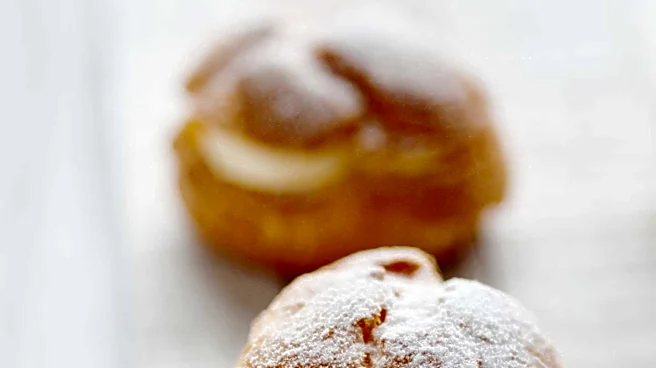
The Wisconsin State Fair has commenced, featuring its iconic cream puffs, a staple since 1924. This year, the fair is expected to see the consumption of approximately 400,000 cream puffs over its 11-day duration. The tradition began when Governor John
Blaine tasked a state food inspector to create a product that would highlight Wisconsin's dairy industry. The cream puffs, made with 800 pounds of shortening and one ton of whipping cream, have become a symbol of the fair. The event, held at the Wisconsin State Fair Park in West Allis, is known for its unique foods, including entries in the 'Sporkies' food competition, and attractions like the Giant Slide and the largest dairy cattle show in the country.
Why It's Important?
The Wisconsin State Fair is a significant cultural event, drawing over a million visitors from across the Midwest. It showcases Wisconsin's agricultural heritage and supports local industries, particularly dairy. The fair provides a platform for youth to engage in agricultural activities, fostering future generations of farmers. Economically, the fair boosts local businesses and tourism, contributing to the state's economy. The event also serves as a community gathering, promoting social interaction and cultural exchange.
What's Next?
The fair will continue until August 16, with various events and competitions scheduled. Visitors can expect to see a range of activities, from animal shows to food contests. The fair's success could influence future events, potentially expanding its offerings and attractions. Stakeholders, including local businesses and the agricultural community, will likely assess the fair's impact on their operations and plan for future participation.
Beyond the Headlines
The Wisconsin State Fair reflects broader cultural and economic trends, such as the increasing interest in local and sustainable food sources. It highlights the importance of preserving agricultural traditions while adapting to modern consumer preferences. The fair's emphasis on unique and innovative foods also points to changing dietary trends and the growing popularity of experiential dining.