


What's Happening?
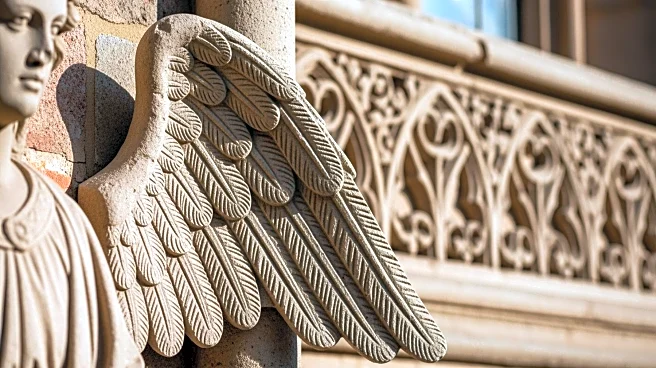
A recent church restoration in Rome has sparked controversy due to a restored angel's resemblance to Italy's Prime Minister Giorgia Meloni. The fresco, located in the San Lorenzo in Lucina basilica, features a winged figure that many believe resembles
Meloni. The restorer, Bruno Valentinetti, who reportedly has ties to right-wing politics, denied any intention to immortalize Meloni, stating he only restored the original image. Italy's Culture Minister Alessandro Giuli has ordered an inspection to determine the nature of the restoration work and decide on further actions. The incident has drawn attention from the Italian press, questioning whether Meloni inspired the restorer.
Why It's Important?
The incident highlights the intersection of art, politics, and public perception. The resemblance of the angel to Prime Minister Meloni, a figure from the radical right-wing Brothers of Italy Party, raises questions about the influence of political figures in cultural and artistic expressions. This situation underscores the sensitivity surrounding political imagery in public spaces, especially in a country with a complex political history. The controversy may impact public trust in cultural restorations and the perceived neutrality of art in political contexts. It also reflects broader societal debates on the role of politics in cultural heritage.
What's Next?
The inspection ordered by Italy's Culture Minister will likely determine the next steps regarding the fresco. Depending on the findings, there could be calls for further restoration or even removal of the controversial image. The outcome may influence future restoration projects and the guidelines governing them. Additionally, the incident may prompt discussions among political leaders and cultural institutions about the boundaries of artistic expression in public spaces. Public reactions and media coverage will continue to shape the narrative around this controversy.
Beyond the Headlines
This event may have deeper implications for the cultural sector in Italy, particularly concerning the preservation of historical art. It raises ethical questions about the responsibilities of restorers and the potential for political bias in their work. The controversy could lead to increased scrutiny of restoration projects and the need for clear guidelines to ensure historical accuracy and neutrality. It also highlights the cultural significance of art as a reflection of societal values and political climates.