
What's Happening?
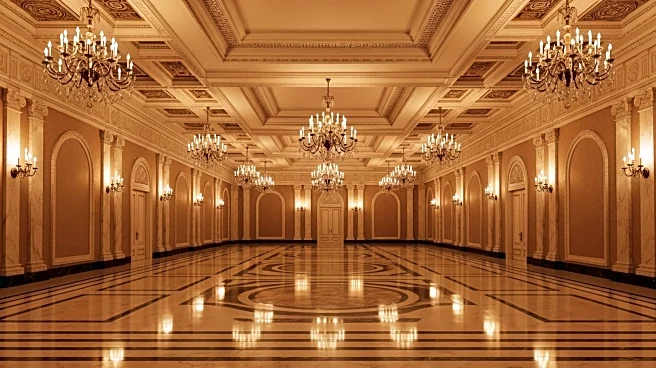
President Donald Trump has declared that the construction of a new ballroom at the White House is irreversible, despite ongoing legal challenges and federal reviews. In a post on his Truth Social platform,
Trump stated that the project could not be halted as key materials have already been procured. This statement comes in contrast to the Justice Department's position in court, where lawyers have argued that the plans are still subject to modification and federal advisory reviews. The National Trust for Historic Preservation has sued the administration, claiming that the project bypassed necessary legal reviews and congressional authorization. The case is currently being heard by U.S. District Judge Richard Leon, who is expected to rule on the matter soon.
Why It's Important?
The construction of the White House ballroom has significant implications for historical preservation and federal oversight. The project has sparked controversy due to its potential impact on the historic integrity of the White House, often referred to as the 'People's House.' The legal battle highlights tensions between the administration's desire for modernization and the need to preserve national heritage. Additionally, the involvement of private donors, including major corporations with government contracts, raises questions about transparency and influence in federal projects. The outcome of this case could set a precedent for future modifications to historic federal buildings.
What's Next?
The next steps involve awaiting Judge Leon's decision on whether the project can proceed. The ruling will determine if construction can continue or if it must be paused for further reviews. The federal advisory panels, now led by Trump appointees, are expected to review the project by March. Their approval or disapproval will significantly influence the project's future. Meanwhile, the National Trust for Historic Preservation and other stakeholders will likely continue to advocate for compliance with legal and preservation standards.