


What's Happening?
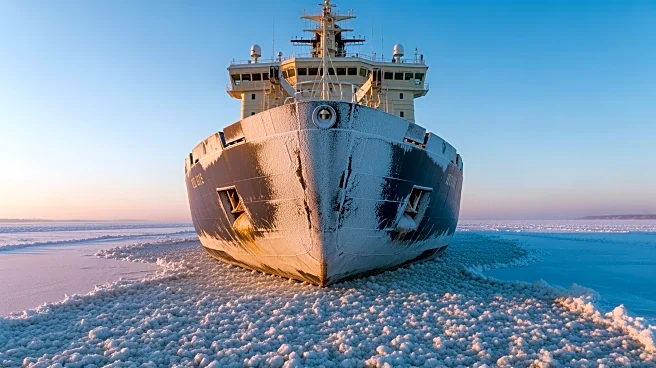
The U.S. Coast Guard (USCG) has commenced icebreaking operations in New York Harbor and the Hudson River due to severe cold weather conditions that have led to ice formation. These operations are crucial as the frozen waterways have disrupted commercial
water traffic, posing significant hazards. The USCG is prioritizing icebreaking in waterways essential for the delivery of fuel, heating oil, and other vital commodities, while also working to reduce the risk of flooding by managing ice formations. Captain Jonathan Andrechik, commander of Coast Guard Sector New York, emphasized the importance of these efforts in maintaining safe navigation and ensuring the continued delivery of essential services. The operations involve three tugs homeported in Bayonne, New Jersey, specifically designated for icebreaking tasks.
Why It's Important?
The icebreaking operations are critical for maintaining the flow of essential goods and services in New York, particularly during a period of extreme cold that has already resulted in fatalities. The operations help prevent disruptions in fuel and heating oil deliveries, which are vital for keeping homes and businesses warm. Additionally, managing ice formations reduces the risk of flooding, which can have severe consequences for infrastructure and public safety. The operations also highlight the broader impact of extreme weather conditions on public transportation and the economy, as frozen waterways can hinder commercial activities and pose safety risks.
What's Next?
As the cold weather persists, the USCG will continue its icebreaking operations to ensure the safety and navigability of New York's waterways. The ongoing efforts will require close coordination with local partners to address the challenges posed by the freezing temperatures. Residents and businesses in the area are advised to prepare for continued cold conditions, which may include ensuring adequate heating and insulation to prevent pipes from freezing. The public is also encouraged to report any individuals at risk due to the cold weather to local authorities.