






What's Happening?
Southeast Asia will need an estimated $7.1 trillion in infrastructure investment by 2040 to sustain its economic expansion, according to a report by the Asian Development Bank (ADB) titled 'The $7 Trillion Challenge: Building Tomorrow’s ASEAN.' This substantial
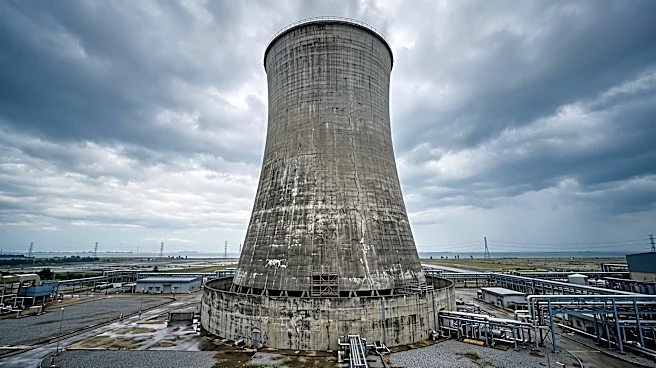
investment is also crucial for enhancing energy security and establishing resilient regional links across the 11 ASEAN member nations. The report projects annual expenditure requirements of $476 billion between 2026 and 2040, which is equivalent to 8.7% of the region’s gross domestic product. Currently, public spending covers only 45% of this demand, leaving an annual funding shortfall of $264 billion. Power and transport sectors account for 85% of the projected demand, with road networks alone requiring nearly $2 trillion and digital infrastructure needing $584 billion.
Why It's Important?
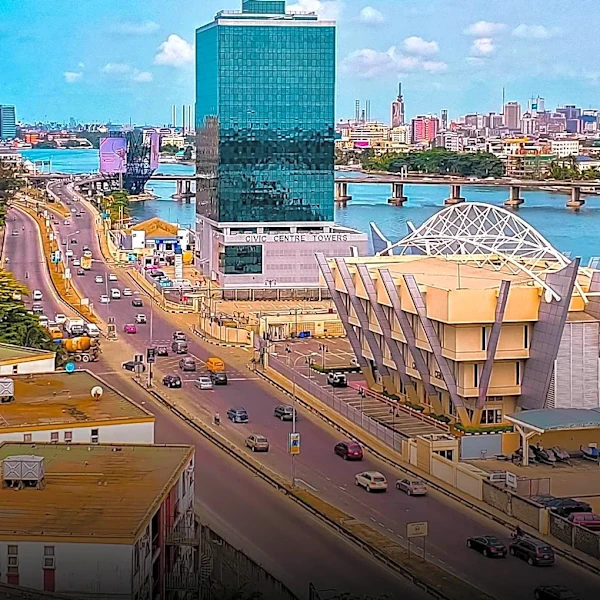
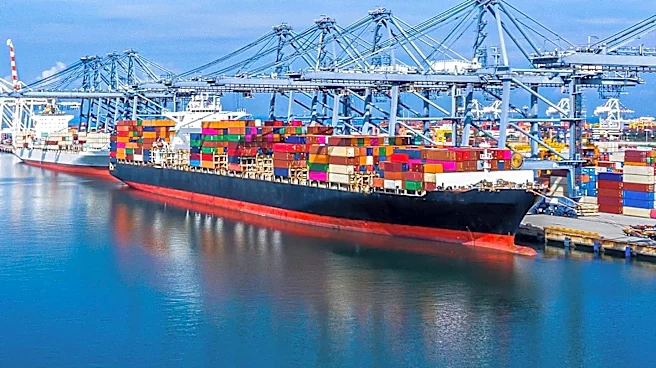
This massive infrastructure investment requirement in Southeast Asia has significant implications for global trade and U.S. businesses. Improved infrastructure in the region can facilitate smoother supply chains, reduce logistics costs, and open new markets for American goods and services. U.S. companies specializing in infrastructure development, energy solutions, and digital technology could find substantial opportunities for investment and partnership. The funding shortfall, however, highlights a potential role for international financial institutions and private capital, including from the U.S., to bridge the gap. Failure to meet these infrastructure needs could hinder economic growth in Southeast Asia, potentially impacting global economic stability and U.S. economic interests tied to the region's prosperity.
What's Next?
The ADB report recommends several key actions to address the infrastructure funding gap, including regulatory harmonization, transparent public procurement frameworks, and strengthened project preparation to attract private capital. The ADB plans to assist governments in developing 'bankable' projects that can secure investor trust. Initiatives like the ADB’s Pan-Asia Power Grid Initiative and the Asia-Pacific Digital Highway are already in place to finance regional electricity trade and digital infrastructure. Moving forward, there will likely be increased efforts to engage private investors and international financial institutions to co-finance these projects. The success of these efforts will depend on the commitment of ASEAN member states to implement the recommended reforms and create an attractive environment for foreign investment.
Beyond the Headlines
Beyond the immediate economic implications, the infrastructure development in Southeast Asia carries broader geopolitical significance. Enhanced regional connectivity and energy security can contribute to greater stability and cooperation among ASEAN nations, which is strategically important for U.S. foreign policy in the Indo-Pacific. The focus on digital infrastructure also underscores the growing importance of technological integration and data flow in the global economy. However, the scale of investment required also raises concerns about environmental sustainability and social equity. Ensuring that these projects are developed responsibly, with minimal environmental impact and equitable benefits for local communities, will be crucial for long-term success and avoiding potential social unrest or environmental degradation.