





What's Happening?
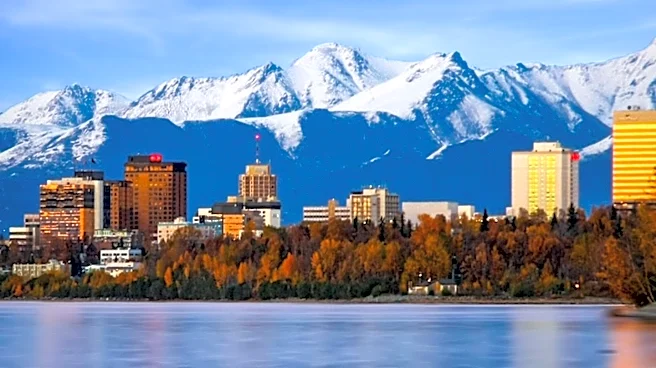
The Municipality of Anchorage is facing projected multimillion-dollar shortfalls, leading to considerations of significant budget cuts across various public services. While city officials anticipate narrowly avoiding major cuts in 2027, Mayor Suzanne
LaFrance's administration has warned that reductions in public service levels are inevitable without new revenue streams beyond next year. LaFrance's draft municipal budget for the upcoming year, totaling $692.5 million, relied on one-time funding and the elimination of vacant positions to close a $15 million deficit. However, these cost-saving measures are not expected to be available next year when the shortfall is projected to double. The proposed cuts, if implemented, could impact fire services (reducing Anchorage Safety Patrol, cutting battalion chiefs, technical rescue teams), snow removal (eliminating seven heavy equipment operators), public transportation (discontinuing People Mover Route 51 and reducing Route 65 frequency), parks and recreation (closing three pools), library services (closing Muldoon Library and reducing Sunday hours), health services (reducing senior center and Brother Francis Shelter funding), and public facilities (cutting janitorial services and security posts, ending Graffiti Busters).
Why It's Important?
These potential budget cuts in Anchorage carry significant implications for the city's residents and overall quality of life. Reductions in essential services like fire protection, snow removal, and public transportation could directly affect public safety, mobility, and daily routines. For instance, the proposed cuts to snow removal could lead to less efficient clearing of roads, impacting commuters and emergency services. The closure of pools and libraries would diminish recreational and educational opportunities, particularly affecting families and underserved communities. Furthermore, reduced funding for senior centers and the Brother Francis Shelter could severely impact vulnerable populations. The municipality's tightening budget, driven by a reduction in state financial support over the last decade and rising costs for healthcare, energy, and construction, highlights a broader challenge faced by many U.S. cities. The need for new revenue streams underscores the fiscal pressures on local governments to maintain essential services amidst increasing operational expenses and fluctuating external funding.
What's Next?
Anchorage Assembly members are actively engaging with the administration and the public to address the looming budget challenges. Assembly members Anna Brawley and Erin Baldwin Day are hosting a Fiscal Future Summit to discuss the municipality's finances with residents in more detail. The Anchorage Assembly is also scheduled to hold a public hearing on the budget, providing an opportunity for community input and discussion. Mayor LaFrance has not yet revealed specific plans for new revenue streams since tabling a 3% sales tax proposal earlier in the year. The administration has been asked to define what it considers 'core services' to guide future budget decisions. The outcome of these discussions and the ability to identify sustainable revenue sources will determine the extent of the cuts and the future level of public services in Anchorage.
Beyond the Headlines
The budget crisis in Anchorage reflects a deeper, systemic issue facing many municipalities across the United States: the increasing strain on local government finances due to reduced state funding, rising operational costs, and the challenge of identifying new, acceptable revenue sources. This situation can lead to a re-evaluation of what constitutes 'essential' public services and can spark difficult conversations about community priorities. The potential disproportionate impact of cuts on certain neighborhoods, as highlighted by Assembly member Erin Baldwin Day, raises questions of equity and social justice. The reliance on one-time funding sources to bridge deficits, as seen in LaFrance's current budget, is a short-term solution that often postpones rather than resolves underlying fiscal imbalances. This scenario could lead to a long-term decline in public infrastructure and services, potentially affecting economic development and resident retention if not addressed with sustainable financial strategies.