
What's Happening?
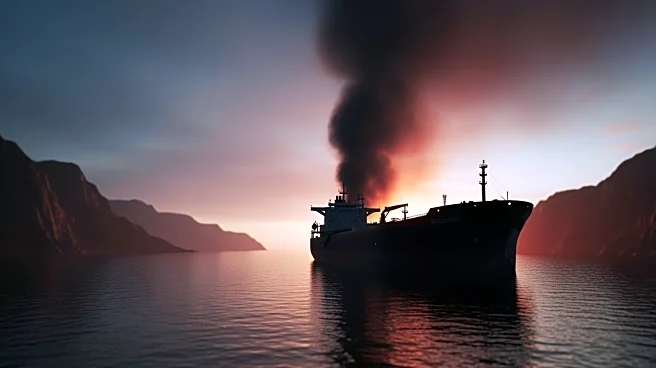
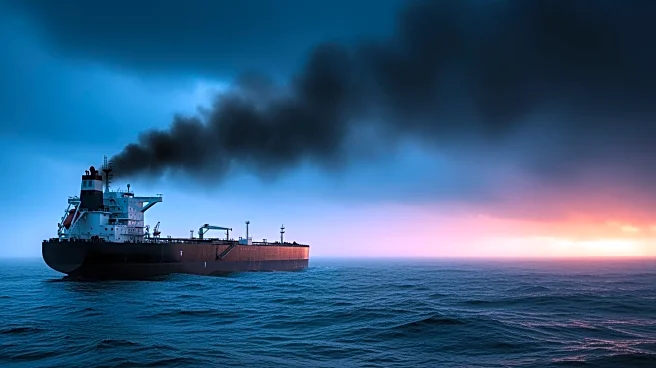
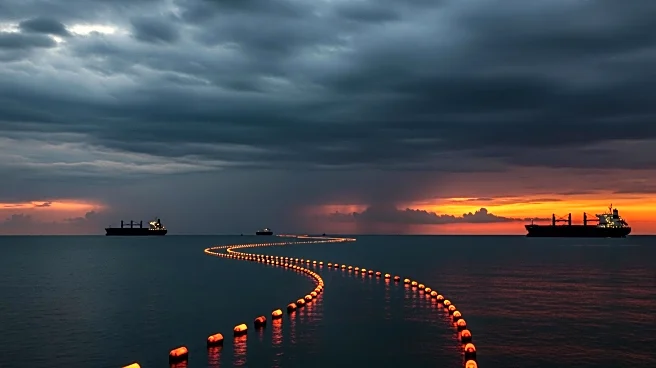
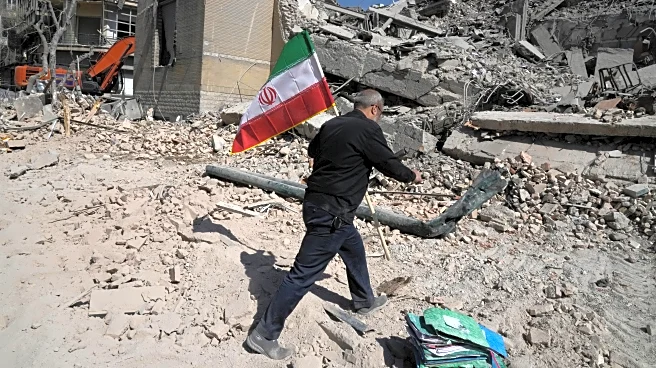
Iran's Islamic Revolutionary Guard Corps has issued a warning that ships traversing the Strait of Hormuz will be 'set ablaze,' causing significant alarm among global government and industrial leaders. The Strait of Hormuz is a critical maritime passage
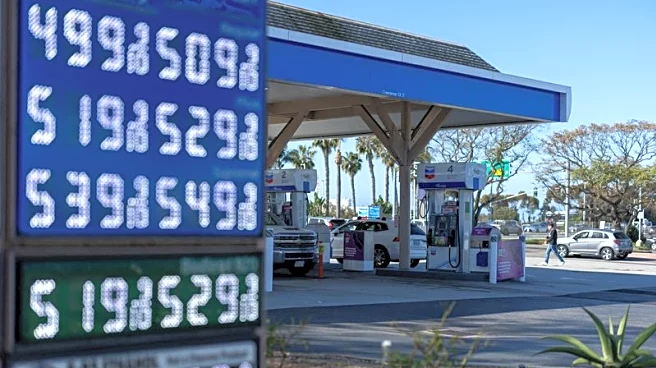
for the Persian Gulf's oil exports, handling about 20% of the world's crude oil. In response to the threat, shipping companies have reduced traffic through the strait, leading to a 90% drop in tanker movement. This has resulted in rising oil prices, with the average price of gasoline in the U.S. increasing significantly. The situation has also led to disruptions in container traffic, affecting the global supply chain.
Why It's Important?
The Strait of Hormuz is a vital chokepoint for global oil supply, and any disruption can have far-reaching economic impacts. The current situation has already led to increased oil prices, which could further strain global economies, particularly those heavily reliant on oil imports. The threat from Iran and the subsequent reduction in shipping traffic highlight the geopolitical tensions in the region, which could escalate into broader conflicts. The U.S. and its allies may need to consider strategic responses to ensure the security of this critical maritime route and stabilize global oil markets.
What's Next?
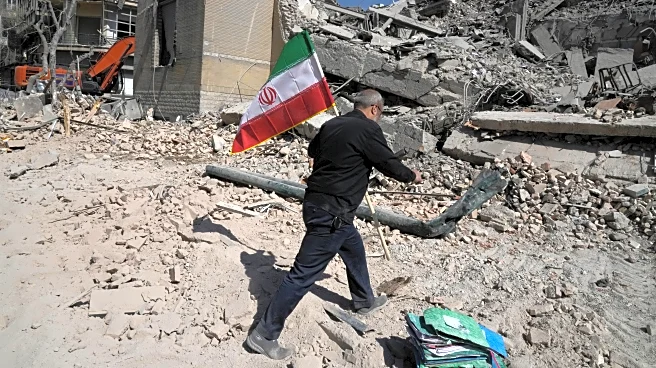
The U.S. government, under President Trump, has proposed offering insurance to commercial vessels and providing U.S. Navy escorts to ensure the continued flow of maritime traffic. However, the effectiveness of these measures remains uncertain, as ship owners may still be reluctant to risk their vessels and crews. The situation could lead to further military engagements in the region, potentially involving more international stakeholders. The global community will be closely monitoring developments, as prolonged disruptions could lead to significant economic and political consequences.