



What's Happening?
Engineers at Northwestern University's McCormick School have developed a new approach to plastic degradation, focusing on designing plastics that can self-destruct through contact with sunlight and microbes. The research, led by Professor Ludmilla Aristilde,
found that while sunlight initiates the breakdown of plastic surfaces by cracking them and adding oxygen atoms, microbes then feed on these damaged areas. The study revealed that environmental factors, such as salt and dissolved organic matter in water, can significantly impede this natural degradation process. For instance, polystyrene exposed to seawater showed minimal change compared to samples in purified or freshwater, where significant cracking and flaking occurred. This suggests that current lab tests, often conducted in purified water, may not accurately reflect real-world degradation rates. The team's findings, published in the journal npj Materials Degradation, highlight the need for plastics engineered to be more susceptible to environmental breakdown.
Why It's Important?
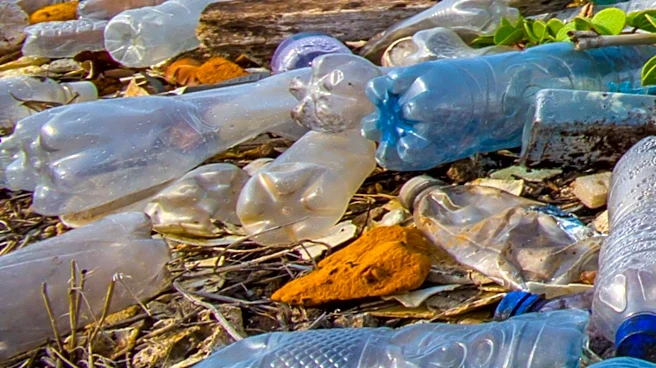
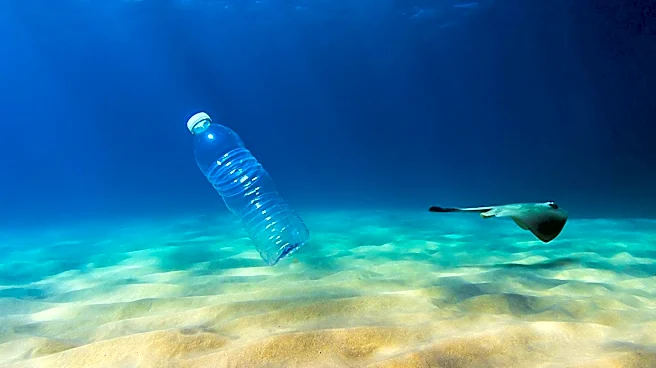
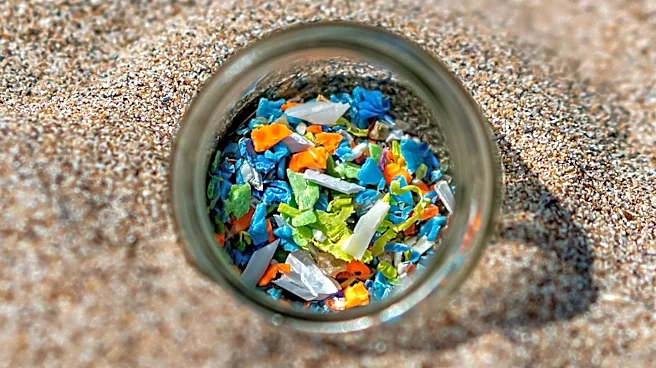
This development is crucial for addressing the escalating global plastic pollution crisis, particularly in marine environments where plastics persist for decades. By understanding how sunlight and microbes interact with plastics in different water chemistries, scientists can design next-generation materials that are inherently more biodegradable. This could lead to a significant reduction in plastic waste accumulation in oceans and landfills, mitigating harm to marine life and ecosystems. The current reliance on plastics that resist natural degradation contributes to long-term environmental damage and resource depletion. Shifting towards self-destructing plastics could offer a sustainable solution, reducing the ecological footprint of plastic production and consumption. This research also underscores the importance of realistic testing conditions for new materials, ensuring their effectiveness in diverse environmental settings.
What's Next?
The research team plans to conduct further studies to measure short-lived molecules involved in the degradation process and to test plastic breakdown across various seasons, water chemistries, and organic matter levels. This will provide a more comprehensive understanding of how these new plastics will perform in real-world conditions. The long-term goal is to develop plastics that are specifically engineered to be more susceptible to sunlight, allowing microbes to complete the degradation process efficiently. This could involve incorporating specific chemical structures or additives that accelerate environmental breakdown. Additionally, the findings could influence the development of new recycling technologies and waste management strategies, moving beyond the traditional 'single-use' model of plastics towards a more circular economy where materials are recovered and reused.
Beyond the Headlines
The deeper implication of this research lies in its potential to fundamentally alter humanity's relationship with plastic. Instead of viewing plastic as a permanent material, this approach encourages a design philosophy where end-of-life degradation is a built-in feature. This shift could lead to a re-evaluation of material science and manufacturing processes, prioritizing environmental impact alongside functionality and cost. Ethically, it addresses the responsibility of producers to create materials that do not perpetually pollute the planet. Culturally, it could foster a greater awareness and expectation for sustainable products, influencing consumer choices and driving demand for eco-friendly alternatives. The long-term impact could be a significant reduction in microplastic contamination, improved ecosystem health, and a more sustainable industrial model for material production.