


What's Happening?
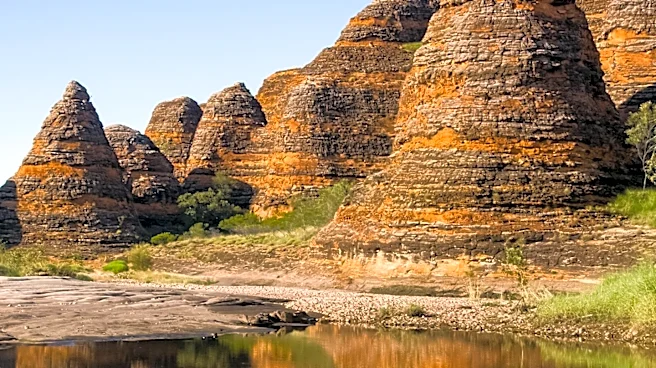
A new study by researchers at the University of York and Curtin University in Australia has revealed that the massive Neolithic 'Devil’s Arrow' stones in Yorkshire, England, were transported 11 miles (18 km) by human effort from Brimham Rocks. This finding
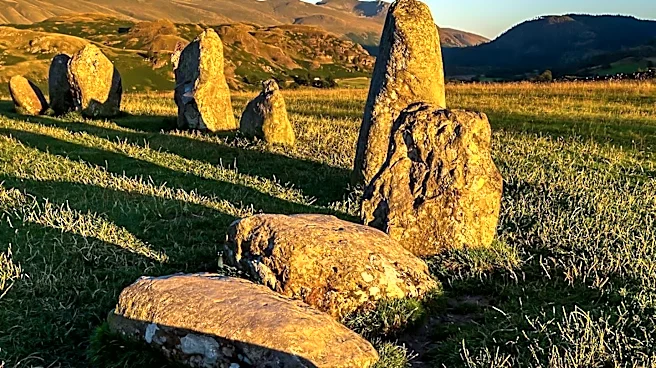
settles a long-standing debate about whether these 25-tonne megaliths were moved by ancient communities or by ice-age glaciers. The geological analysis, which included isotopic 'fingerprinting' of the stones, confirmed that Neolithic builders deliberately bypassed closer stone sources to bring the giant megaliths from a specific, distant landscape. The study also confirmed a 19th-century theory that a missing fourth stone is now part of the Battle Cross in the nearby village of Aldborough. The three surviving pillars near Boroughbridge are among the tallest standing stone rows in Britain, exceeding the height of stones at Stonehenge.
Why It's Important?
This research significantly enhances our understanding of the capabilities and intentions of Neolithic communities. It demonstrates their advanced organizational skills and engineering prowess in moving such colossal stones over considerable distances, suggesting a deliberate and monumental effort to create a sacred landscape. The findings challenge previous assumptions that natural forces, like glaciers, were solely responsible for the placement of such large geological features, thereby elevating the perceived sophistication of prehistoric societies. For archaeologists and historians, this provides crucial insights into the cultural and spiritual practices of these ancient peoples, indicating a profound connection to specific geological sources and a willingness to undertake immense labor for ceremonial purposes. The confirmation of the missing stone's location also validates historical accounts and local legends, bridging the gap between folklore and scientific evidence.
What's Next?
The research, published in the journal Proceedings of the Royal Society A, is expected to stimulate further archaeological investigations into other megalithic sites to re-evaluate the methods of stone transportation and construction used by ancient civilizations. Historic England's North Region Inspector of Ancient Monuments, Jess Tipper, expressed enthusiasm for the discoveries, indicating that the new understanding will contribute to efforts to protect and preserve these significant historical monuments for future generations. The findings may also inspire new educational programs and public engagement initiatives at sites like the Devil's Arrows and Brimham Rocks, allowing visitors to appreciate the extraordinary journey of these stones and the ingenuity of their ancient movers. Future studies might focus on the exact routes taken and the specific techniques employed by the Neolithic communities.
Beyond the Headlines
The study's implications extend beyond mere geological and archaeological facts, touching upon the human drive to shape and sacralize landscapes. The deliberate choice to transport stones from a distant, specific source, rather than using readily available local materials, suggests a deeper symbolic or spiritual significance attached to the origin of the stones. This highlights a sophisticated understanding of their environment and a complex belief system that motivated such arduous undertakings. The connection between Brimham Rocks and the Devil's Arrows, now scientifically proven, transforms these sites from isolated natural phenomena into interconnected elements of a grand, ancient design. This research underscores the enduring human capacity for monumental construction and the profound cultural narratives embedded within our ancient landscapes, offering a glimpse into the minds of our distant ancestors and their relationship with the natural world.