



What's Happening?
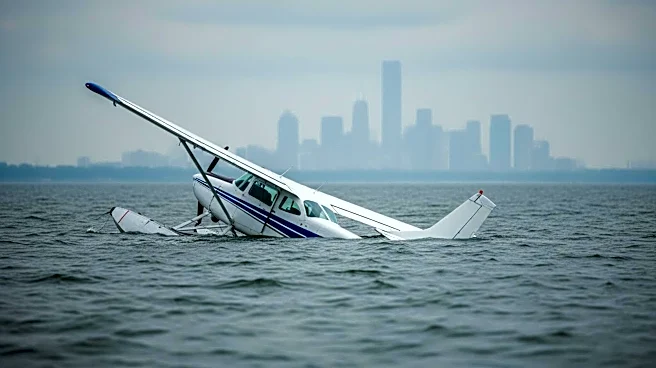
A seaplane carrying eight individuals made a rough landing in New York City's East River on Sunday, causing alarm among bystanders. According to the New York City Fire Department, the incident occurred around noon when the seaplane made a 'hard landing.'
Despite the rough landing, the plane remained upright and was subsequently towed back to the dock. The incident resulted in two minor injuries. The Federal Aviation Administration (FAA) reported that the hard landing caused a 'wing strut' on the Kodiak 100 seaplane to snap. Images shared on social media depicted the plane leaning on its side with the tip of its left wing submerged in water, while a helicopter circled overhead. The origin of the flight was not immediately clear, but video footage suggested the plane was approaching a landing at the nearby Skyport.
Why It's Important?
This incident highlights the potential risks associated with seaplane operations in urban areas, particularly in a densely populated city like New York. The event underscores the importance of stringent safety measures and protocols for seaplane operations to prevent accidents and ensure passenger safety. The FAA's involvement in investigating the structural failure of the wing strut may lead to further scrutiny of seaplane maintenance and operational standards. Additionally, the incident could prompt discussions on the regulation of seaplane traffic in busy waterways, balancing the convenience of such transport with public safety concerns. The minor injuries reported also serve as a reminder of the potential for more severe outcomes in similar situations, emphasizing the need for emergency preparedness and response capabilities.
What's Next?
Following the incident, the FAA is likely to conduct a thorough investigation to determine the cause of the hard landing and the structural failure of the wing strut. This investigation may result in recommendations or mandates for enhanced safety checks and maintenance procedures for seaplanes. The findings could also influence future regulations regarding seaplane operations in urban environments. Stakeholders, including seaplane operators and regulatory bodies, may engage in discussions to address safety concerns and improve operational protocols. Additionally, there may be increased public and governmental scrutiny on the safety of seaplane travel, potentially affecting the industry's regulatory landscape.