




What's Happening?
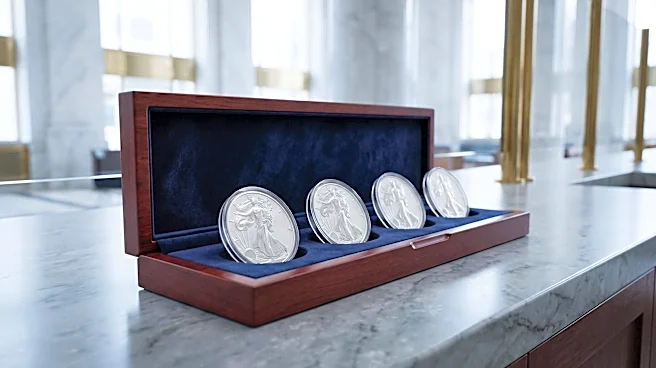
The United States Mint is set to open orders for its 2026 American Innovation Reverse Proof Set on October 13, 2026, at noon Eastern Time. This four-coin set, priced at $60.00, features designs honoring Iowa (Dr. Norman Borlaug), Wisconsin (the Cray-1
supercomputer), California (Steve Jobs), and Minnesota (mobile refrigeration). The mintage limit for this set has been established at 99,792, with a household order limit of two sets. This represents a substantial increase in both price and mintage compared to the 2025 edition, which was priced at $32.25 and limited to 50,028 sets. The price hike reflects a general increase across the Mint's numismatic products in early 2026, with the annual Proof Set also seeing a significant jump from $40.25 to $107.00. Each coin in the set features a standard obverse with the Statue of Liberty and a privy mark incorporating a Liberty Bell with '250' to commemorate the nation's semiquincentennial.
Why It's Important?
The significant increase in both the price and mintage limit for the 2026 American Innovation Reverse Proof Set carries notable implications for coin collectors and the numismatic market. The nearly doubled price, from $32.25 in 2025 to $60.00 in 2026, could deter some collectors, particularly those who viewed previous editions as more affordable. This price adjustment is part of a broader trend of increased pricing across the U.S. Mint's numismatic offerings, suggesting a strategic shift in their pricing model. Concurrently, the near doubling of the mintage limit to 99,792 sets raises questions about market demand. Previous sets, such as the 2024 and 2023 editions, sold 36,030 and 42,431 units respectively by late December 2025, well below the new 2026 limit. This could lead to a surplus of available sets if demand does not match the increased supply, potentially impacting the secondary market value and collectibility of these coins. The Mint's decision to feature highly recognizable figures and innovations like Dr. Norman Borlaug, the Cray-1 supercomputer, Steve Jobs, and mobile refrigeration aims to broaden appeal, but the success of this strategy will be tested by collector willingness to pay the higher price point.
What's Next?
The immediate next step is the opening of orders for the 2026 American Innovation Reverse Proof Set on October 13, 2026. The sales performance in the initial days and weeks following this release will be a key indicator of whether the U.S. Mint's strategy of increasing both price and mintage will be successful. Collectors will closely monitor sales figures to gauge demand and potential future market value. The Mint will likely analyze these sales to inform future pricing and mintage decisions for its numismatic products. If sales fall short of expectations, the Mint may need to re-evaluate its pricing structure or mintage limits for subsequent releases. Conversely, strong sales could validate their current strategy. The inclusion of the Liberty Bell '250' privy mark, commemorating the nation's semiquincentennial, ties this set into a broader anniversary program, and the reception of this specific design element will also be observed. The long-term collectibility and secondary market performance of this set will depend on how these factors play out.
Beyond the Headlines
The U.S. Mint's decision to significantly increase the price and mintage of the 2026 American Innovation Reverse Proof Set reflects a broader shift in the numismatic market and the Mint's operational strategies. This move could be interpreted as an attempt to maximize revenue from popular series, potentially leveraging the strong historical and cultural narratives associated with the featured innovations and individuals. However, it also raises questions about accessibility for a wider range of collectors, as the higher price point might alienate those with more modest budgets. The increased mintage, while potentially meeting higher demand if it materializes, also risks diluting the perceived rarity and long-term investment value of the sets, a crucial factor for many collectors. This situation highlights the delicate balance the Mint must maintain between generating revenue, preserving the collectibility of its products, and engaging its diverse customer base. The inclusion of figures like Steve Jobs, a prominent figure in technology, and Dr. Norman Borlaug, a Nobel laureate, underscores the Mint's effort to connect numismatic art with significant American contributions to innovation and progress, aiming to appeal to a broader audience beyond traditional coin enthusiasts.