






What's Happening?
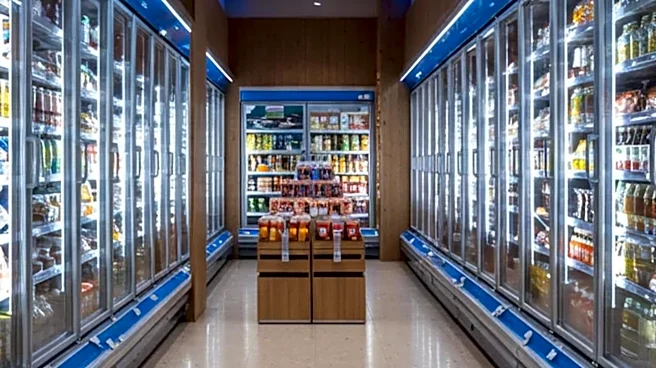
The Italian government, led by Premier Giorgia Meloni, has assessed recent cyber attacks targeting the refrigeration systems of some supermarkets in Italy and other parts of Europe. Following a meeting involving Cabinet Secretary Alfredo Mantovano, Agriculture
Minister Francesco Lollobrigida, and heads of intelligence services and the National Cybersecurity Agency, the Premier's office stated that the attacks had a 'limited impact' in Italy. Crucially, no cases of risk to public health attributable to the thawing of frozen food have emerged. Despite the limited impact, all relevant institutional bodies remain on high alert. This assessment aims to reassure the public and prevent undue alarm regarding the security of food supplies and critical infrastructure.
Why It's Important?
This event highlights the increasing vulnerability of critical infrastructure, including food supply chains, to cyber threats. While the immediate impact in Italy was deemed limited, such attacks can cause significant disruption, economic losses, and public panic if not managed effectively. The government's swift response and transparent communication are vital in maintaining public trust and demonstrating preparedness. For the U.S., this serves as a reminder of the need for robust cybersecurity defenses across various sectors, particularly those essential for daily life. The interconnected nature of global supply chains means that a cyber incident in one region can have ripple effects internationally, potentially impacting U.S. businesses and consumers. Proactive measures and international cooperation in cybersecurity are essential to mitigate such risks.
What's Next?
Although the Italian government has declared no cause for alarm, institutional bodies will remain on high alert, suggesting continued monitoring and potential reinforcement of cybersecurity measures. This incident may prompt further investigations into the origins and methods of the cyber attacks to prevent future occurrences. Internationally, this event could lead to increased collaboration among European nations and potentially with the U.S. to share intelligence and develop more resilient cybersecurity frameworks for critical infrastructure. Businesses, especially those in the food and retail sectors, may also review and enhance their own cyber defenses in light of this incident.
Beyond the Headlines
The cyber attacks on supermarket refrigeration systems underscore a broader trend of sophisticated digital threats targeting physical infrastructure. This blurs the lines between traditional and cyber warfare, raising questions about national security in the digital age. The incident also touches upon the ethical implications of cyber warfare, particularly when it targets civilian infrastructure that could impact public health. The government's emphasis on 'limited impact' and 'no risk to public health' reflects a strategic communication effort to control narratives and prevent widespread fear, which itself is a critical component of modern cyber defense. This event could also accelerate the development of 'cyber resilience' strategies, focusing not just on preventing attacks but also on quickly recovering and minimizing damage when breaches occur.