
What's Happening?
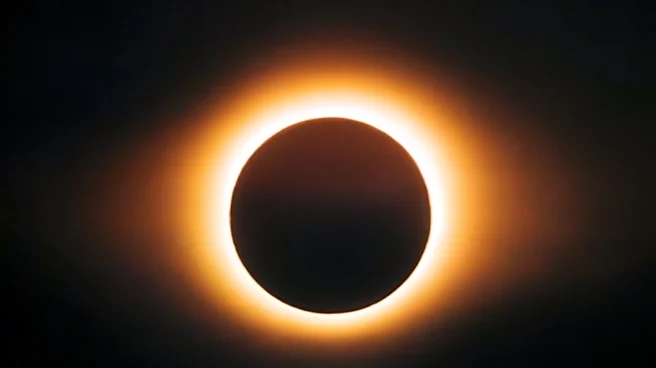
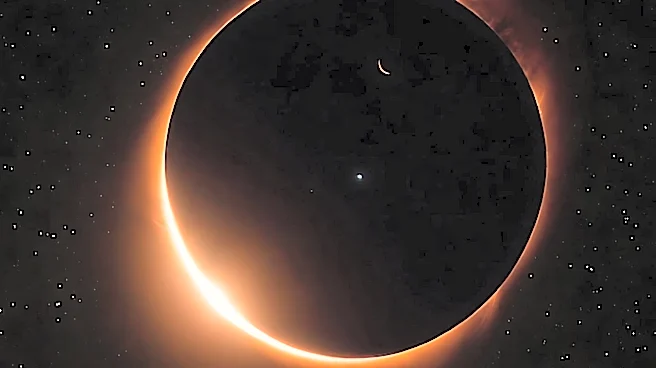
NASA's solar physicist Alex Young has highlighted the precision of current solar eclipse predictions, which are accurate to within a kilometer or so. This precision is based on extensive astronomical observations and mathematical calculations. Michael
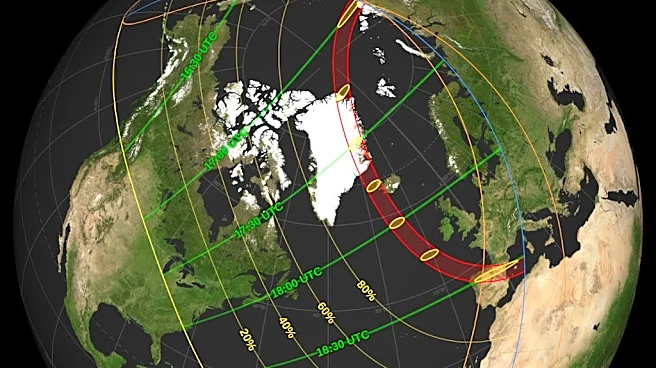
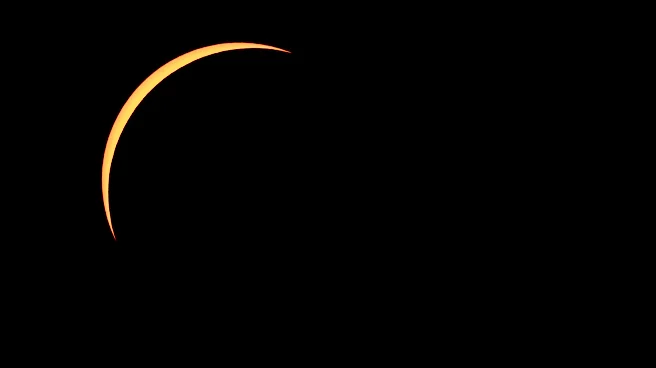
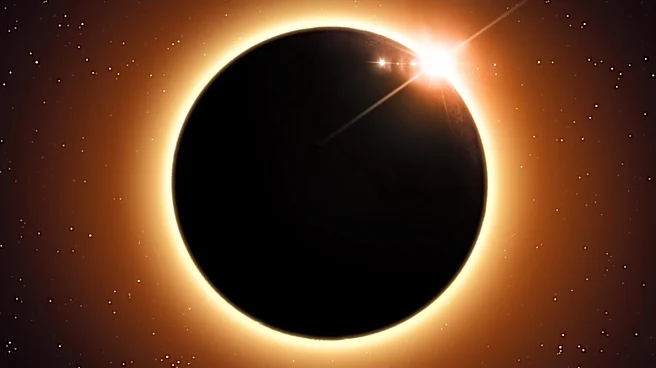
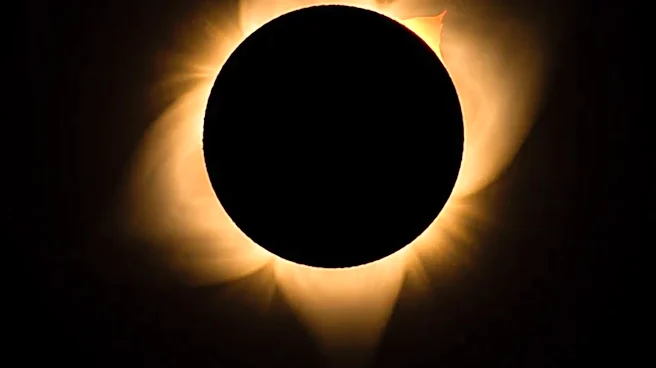
Zeiler, an eclipse cartographer, has been creating detailed maps to help the public view solar eclipses, emphasizing the importance of both scientific accuracy and effective communication. The upcoming total solar eclipse will be visible in parts of Greenland, Iceland, northern Spain, and northeastern Portugal, with partial views available in parts of Europe, Africa, and North America.
Why It's Important?
The ability to accurately predict solar eclipses has significant implications for both scientific research and public engagement. For scientists, precise eclipse predictions allow for better planning of observational studies, which can lead to new discoveries about the sun and its interactions with Earth. For the public, these predictions enhance the viewing experience, making it possible for more people to witness these rare celestial events. This can increase public interest in astronomy and science in general, potentially inspiring future generations of scientists.
What's Next?
Future advancements in eclipse prediction could lead to even more precise mapping, potentially down to the meter scale. This would further enhance both scientific research and public viewing experiences. Additionally, as technology and methods improve, the ability to predict and map other astronomical events with similar precision could become possible, broadening the scope of public engagement with space science.