

What's Happening?
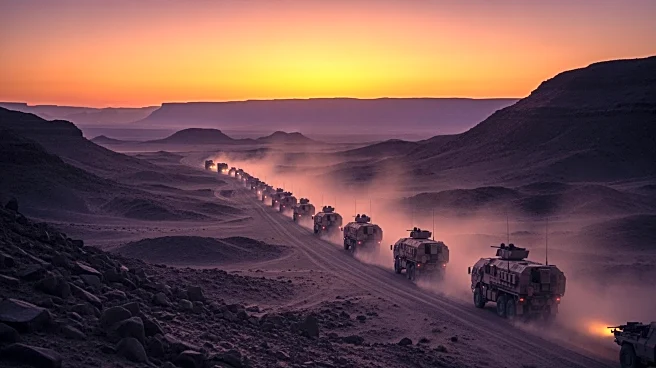
Analysts suggest that the conflict between the United States and Iran may escalate as President Trump approaches a self-imposed six-week deadline to achieve his military objectives. The U.S. has deployed thousands of troops to the region, preparing for
potential ground operations. The strategic focus includes maintaining control over the Strait of Hormuz and potentially seizing Iran's oil export terminal on Kharg Island. The situation remains tense as Iran continues to exert control over key maritime routes, impacting global oil supplies and economic stability.
Why It's Important?
The conflict has significant implications for global energy markets and geopolitical stability. The closure of the Strait of Hormuz by Iran has disrupted global oil supplies, leading to increased prices and economic uncertainty. The U.S. faces pressure to achieve its strategic objectives without further destabilizing the region. The situation also tests the diplomatic strategies of the U.S. and its allies, as they seek to balance military actions with efforts to achieve a peaceful resolution. The potential for further escalation poses risks of broader regional conflict, impacting global economic stability.
What's Next?
The U.S. is likely to continue its military buildup in the region, with additional troops and resources being deployed. Diplomatic efforts are ongoing, with the U.S. seeking to negotiate a resolution that addresses its concerns over Iran's nuclear program and regional influence. The outcome of these negotiations will significantly impact the future of U.S.-Iran relations and the stability of the Middle East. The international community is closely monitoring the situation, with potential interventions from other global powers to prevent further escalation.